
Separate paid entries in 11 of 12 states.
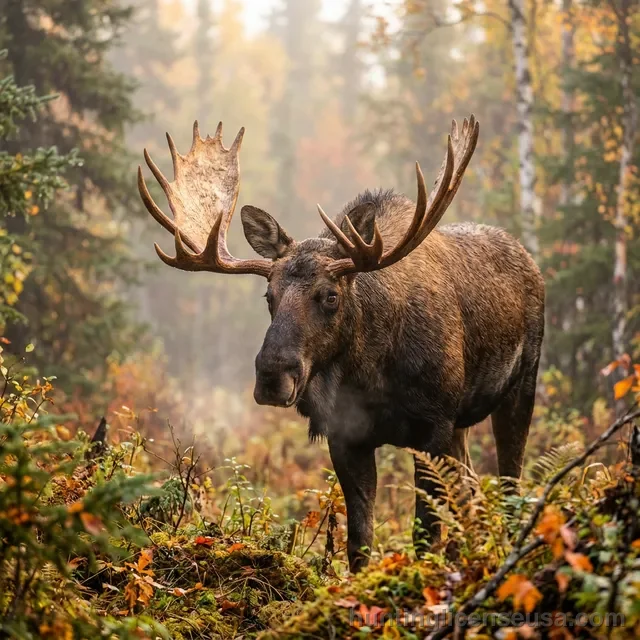
Moose
Moose Hunting License: Draw Odds, Cost & Tags by State (2026)
Compare moose hunting license costs, extra permits, and season dates across 12 states.
States 12 Allow moose hunting
Resident Add-On $200 Separate paid entries in 11 states
Non-Resident Add-On $1453 Separate paid entries in 10 states
Draw Required 11 States Lottery/draw required
Editorial review
Reviewed by Kevin Luo, editor and verification lead, for Moose permit, tag, stamp, season, and state-comparison guidance.
Source coverage reviewed August 17, 2026
TAG COST CHECK
Moose Hunting Tag Cost
Use this before the full state table when you need the likely moose license, tag, draw, or permit budget.
Separate paid entries in 10 of 12 states.
Vermont has the lowest paid non-resident moose entry in this table.
Colorado is the highest paid non-resident moose entry in this table.
True total cost usually means base hunting license + moose tag or permit + any other stamps, draw applications, access permits, or reporting requirements. Moose non-resident tag or permit costs start around $350 in Vermont and reach $2823.53 in Colorado. 11 states require a draw or lottery step, so budget planning should start before the season opens.
Use this species-specific page for moose permits, tags, seasons, and draw context. For state-specific base license rules, open the matching state page. Use the calculator when the next step is estimating the full license and permit cost.
OVERVIEW
Moose Hunting in the United States
Moose hunting in the United States is an exclusive, once-in-a-lifetime pursuit limited to fewer than a dozen states. The moose is the largest member of the deer family, with bulls weighing 1,000–1,800 pounds and sporting palmate antlers spanning up to 6 feet. Three subspecies exist in the US: the massive Alaska-Yukon moose in Alaska, the Eastern/Canada moose in New England, and the smaller Shiras moose in the Rocky Mountain states. Alaska is the only state offering general-season moose hunting accessible to all hunters without a draw, while the remaining moose states use highly competitive lottery/draw systems with success rates often below 1–5%. Many states impose once-in-a-lifetime restrictions — once you draw a moose tag, you can never apply again. Due to low draw odds, many hunters accumulate preference or bonus points for 10–20+ years before drawing. Non-resident moose tags are among the most expensive hunting permits in the US, ranging from $350 to over $2,800. The total US moose population is approximately 300,000, with Alaska holding roughly 175,000 animals.
REQUIREMENTS
What Moose Hunters Need Beyond the Base License
Tags, extra permits, stamps, and draw rules that commonly apply.
Moose hunting in the US is usually an application-driven hunt, with Alaska general-season opportunities as the main exception and even those controlled by unit-specific rules. Key requirements include: (1) Valid hunting license for the state; (2) Successful draw application where the state or unit requires it (often submitted 3–12 months before season); (3) Non-refundable application fee ($5–$100+) separate from tag cost; (4) Hunter education certification where required; (5) Many states have once-in-a-lifetime provisions — if you draw a moose tag, you may be unable to apply again in that state. Non-residents are excluded in several states (MN, ND). Moose tags are among the most expensive permits: highlighted examples run from Maine's $52 resident permit to Colorado's $385.66 resident moose license, and from Vermont's $350 non-resident permit to Colorado's $2,823.53 non-resident moose license. In states with preference point systems (MT, WY), accumulating points costs $50–$100 per year and may take 10–20+ years. Some states require hunters to take the first legal moose encountered. Harvest reporting and biological data collection requirements vary by state.
Plan the Full Purchase
Start with the base hunting license, then layer in the species tag, migratory bird permit, draw application, or season-specific stamp that applies to your moose hunt.
SOURCES
Moose Hunting Official Sources
These sources support the Alaska, Colorado, Idaho, Maine, and Wyoming moose cost and access planning summaries highlighted on this page. Other state rows remain planning summaries and should be checked against the current state agency before applying or purchasing.
COST COMPARISON
Moose Hunting License Cost by State
Compare moose tag and permit fees across 12 states for the 2026 season.
TOP PICKS
Best States for Moose Hunting
Expert-recommended destinations for moose hunters.
#1
Alaska
Alaska is the only state with broad general-season moose opportunity that does not start with a statewide draw. Alaska non-resident moose locking tag is $800, while resident harvest ticket access still sits inside Alaska license and unit rules. Hunters must confirm the current Game Management Unit before treating a hunt as general-season access.
Broad general-season moose opportunity, but unit rules still control access
#2
Maine
Maine has the largest moose population in the lower 48 states and issues the most moose permits outside of Alaska. Maine moose permits are $52 resident / $585 non-resident after a successful lottery draw, with application entries handled separately. The state offers archery, firearms, and muzzleloader seasons by district and permit type.
Lower-48 lottery scale with $585 NR permit after a successful draw
#3
Wyoming
Wyoming produces trophy Shiras moose in the Greater Yellowstone Ecosystem and Bighorn Mountains. Wyoming moose is $125 resident / $2,752 non-resident, and draw odds are extremely low in many units. The state maintains premium quality with very limited permits.
Trophy Shiras moose in the Greater Yellowstone Ecosystem
#4
Montana
Montana offers Shiras moose hunting in its western mountain ranges with draw odds of 1–3%. The preference point system ($50 res/$100 NR per year) allows dedicated hunters to build odds. Western Montana's wilderness areas produce quality bulls in stunning terrain.
Preference point system helps build odds over time
#5
New Hampshire
New Hampshire's moose lottery draws strong interest with about 50–75 permits annually. The state's North Country offers the best hunting, and success rates for permit holders exceed 70% — among the highest of any state. Tags are relatively affordable at $500 NR, and some of New England's largest bulls come from NH.
70%+ success rates for permit holders with scenic North Country hunting
SEASONS
Moose Hunting Season Dates by State
Season dates, weapon types, and regulations at a glance.
FAQ
Frequently Asked Questions About Moose Hunting Licenses
How much does a moose hunting license cost?
Moose tag costs vary enormously. For residents, Alaska may list no separate resident moose locking-tag price for harvest-ticket hunts, but the resident harvest ticket still sits inside Alaska license and unit rules. Highlighted resident examples include Maine at $52, Vermont at $100, Montana and Wyoming at $125 each, Idaho at $199.75, and Colorado at $385.66. For non-residents, examples include Vermont at $350, New Hampshire at $500, Maine at $585, Alaska at $800, Montana at $1,250, Washington at $1,304, Utah at $1,543, Wyoming at $2,752, Idaho at $2,626.75, and Colorado at $2,823.53. Plus you need a base hunting license where the state requires it.
What states have moose hunting?
Twelve states currently offer moose hunting: Alaska (general season), Maine, New Hampshire, Vermont, Montana, Wyoming, Idaho, Minnesota, North Dakota, Colorado, Utah, and Washington. Minnesota and North Dakota are resident-only. Alaska is the only state where moose tags are available without entering a draw.
What are the odds of drawing a moose tag?
Draw odds vary but are generally very low. Maine offers the best odds in the lower 48 at around 6%. Montana and Wyoming residents see 1–3% odds in most units. New Hampshire is about 1–2%. Western states like Colorado, Idaho, and Utah often have odds below 1%. Building preference or bonus points over 10–20+ years is the main strategy to improve odds.
Is moose hunting once-in-a-lifetime?
In several states, yes. Wyoming, North Dakota, Minnesota, and Utah have once-in-a-lifetime provisions — once you draw a moose tag, you cannot apply again, ever. Other states like Maine allow hunters to reapply after a waiting period. Montana and Idaho allow reapplication after a waiting period. Alaska has no such restriction.
Can non-residents hunt moose?
Non-residents can hunt moose in Alaska, Maine, New Hampshire, Vermont, Montana, Wyoming, Idaho, Colorado, Utah, and Washington. Minnesota and North Dakota restrict moose hunting to residents only. Non-resident tags range from $350 in Vermont to more than $2,800 in Colorado before any base license, application, habitat, point, or transaction items, making moose one of the most expensive hunting pursuits.
What is the best way to get a moose tag?
For immediate access, Alaska is the only option with general-season (no-draw) areas — NR moose tags are $800. For the lower 48, Maine offers the best draw odds (~6%) with a $585 NR tag. In states with preference point systems (Montana at $100/year NR, Wyoming), buying a point annually builds your odds, though it may still take 15–25+ years to draw in competitive units.
How big is a moose?
Moose are the largest deer species in the world. Alaska-Yukon moose bulls average 1,200–1,800 lbs and can stand over 7 feet tall at the shoulder with antler spreads up to 6 feet. Eastern/Canada moose in New England are slightly smaller (900–1,400 lbs). Shiras moose in the Rockies are the smallest subspecies (800–1,200 lbs). A single moose can yield 400–700 lbs of meat.