
Separate paid entries in 17 of 17 states.
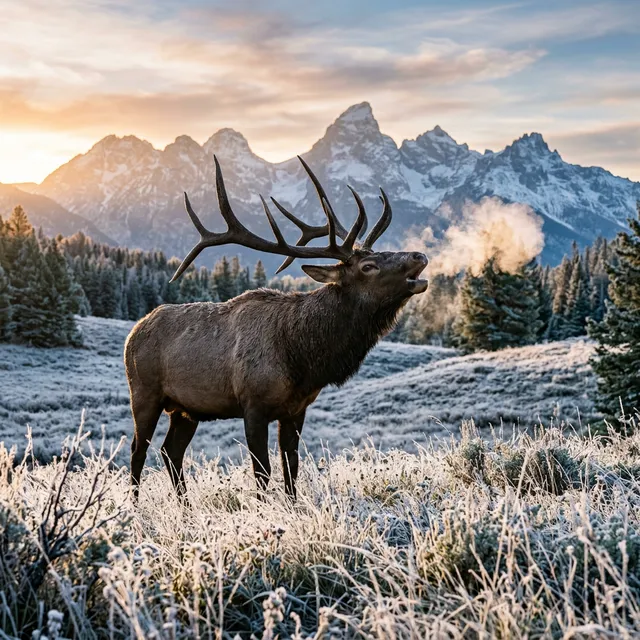
Elk
Elk Hunting License 2026: Cost, Draws & OTC Tags
Compare elk hunting license costs, extra permits, and season dates across 17 states.
States 17 Allow elk hunting
Resident Add-On $72 Separate paid entries in 17 states
Non-Resident Add-On $658 Separate paid entries in 13 states
Draw Required 16 States Lottery/draw required
Editorial review
Reviewed by Kevin Luo, editor and verification lead, for Elk permit, tag, stamp, season, and state-comparison guidance.
Source coverage reviewed August 17, 2026
TAG COST CHECK
Elk Hunting Tag Cost
Use this before the full state table when you need the likely elk license, tag, draw, or permit budget.
Separate paid entries in 13 of 17 states.
Pennsylvania has the lowest paid non-resident elk entry in this table.
Nevada is the highest paid non-resident elk entry in this table.
True total cost usually means base hunting license + elk tag or permit + any other stamps, draw applications, access permits, or reporting requirements. Elk non-resident tag or permit costs start around $250 in Pennsylvania and reach $1200 in Nevada. 16 states require a draw or lottery step, so budget planning should start before the season opens.
Use this species-specific page for elk permits, tags, seasons, and draw context. For state-specific base license rules, open the matching state page. Use the calculator when the next step is estimating the full license and permit cost.
OVERVIEW
Elk Hunting in the United States
Elk hunting is one of the most coveted big game experiences in North America, attracting hundreds of thousands of hunters to the western United States each year. The Rocky Mountain elk is the most widely pursued subspecies, found primarily in Colorado, Montana, Wyoming, Idaho, Oregon, and several other western states. Roosevelt elk inhabit the Pacific Northwest coast, and a small population of tule elk exists in California. Unlike deer hunting, elk tags in most states are allocated through competitive draw/lottery systems with limited permits, making advance planning and preference point accumulation essential. Non-resident elk tags are among the most expensive big game permits in the country, often exceeding $800–$2,500 when combined with required qualifying licenses. For 2026 non-resident planning, Colorado, Idaho, Montana, and Wyoming need separate treatment: Colorado no longer has the same broad non-resident OTC archery elk path, Idaho moved non-resident general-season elk access into an advance tag process, Montana general elk access usually runs through its non-resident combination-license system, and Wyoming separates Regular and Special non-resident draw price tiers. If your question is what states have OTC elk tags for non resident 2026, start here because non-resident OTC elk tags now depend on state, unit, season, and hunt code instead of one simple national list. This is the non-resident elk strategy page for OTC vs. draw choices, not a state checkout page; state pages own the final base license, purchase portal, residency rule, and exact unit-specific add-ons. Wyoming offers a $692 Regular non-resident elk/fishing license or a $1,950 Special non-resident elk/fishing license, with the $15 non-resident application fee added when applying. Several eastern states including Kentucky, Virginia, and Wisconsin have reintroduced elk with extremely limited permits, creating once-in-a-lifetime opportunities. The North American elk population is estimated at over 1 million animals, with approximately 280,000 in Colorado alone.
Elk Tag Costs in 2026: What You Actually Pay by State
Elk tag costs vary more dramatically than any other North American big game species — from $20 for a Montana resident to $1,950 for a Wyoming Special non-resident license before application fees. For non-residents, the total cost of an elk hunt typically combines a qualifying base hunting license with a species-specific elk tag or combination license. Montana's NR General Elk Combination is a $1,112 combination license plus separate conservation, base hunting, and AISPP items. Colorado elk/fishing combo is $845.16 for an adult non-resident in 2026, and the annual Habitat Stamp is $12.76 for hunters ages 18-64. Wyoming's Regular Non-Resident Elk/Fishing Privilege license is $692, while the Special license is $1,950; add the $15 non-resident application fee when applying.
Idaho fundamentally changed for non-residents in 2026: the state moved its NR general season elk tags from over-the-counter (OTC) availability to a draw/lottery system. NR applicants now compete for a limited allocation each year. The tag cost ($651.75) plus the $195 non-resident license stack brings Idaho's standard adult entry cost to about $846.75 before weapon permits or other checkout items, with no guaranteed access. Oregon non-resident elk tags are $609.50 plus a base hunting license. Utah's NR elk tags are $613 plus the license cost. Arizona and Nevada have the lowest non-resident tag allocation odds (often under 5% for premium bull units) but produce some of the trophy-class bulls, with units averaging 330+ Boone & Crockett inches.
Eastern elk hunting is entirely different from the western draw landscape. Kentucky issues approximately 600 elk permits per year in the southeastern coal country region; NR tags are $380. Pennsylvania allocates roughly 150 permits annually at $250 NR in the Elk County area near Benezette. Virginia has approximately 40 permits in Buchanan County at $250 NR. Michigan (~200 permits, resident-only, $100 license with $5 application fee) and Minnesota (~40 permits, resident-only) restrict elk hunting to residents only. Wisconsin elk permits are also resident-only. Budget planning for a western elk trip: add guide fees ($4,000–$15,000 for a guided hunt), travel, and camp expenses to tag costs. DIY public land hunters can significantly reduce costs but should account for preference point accumulation years before a first successful draw.
OTC vs. Draw: The Two Systems That Define Western Elk Hunting
As of 2026, non-resident elk hunters should separate Colorado and Montana from Idaho instead of treating all three as simple OTC states. Montana general elk access is commonly planned through the non-resident combination-license system. Colorado still has possible rifle and leftover/returned-license paths, but the broad non-resident OTC archery elk route is gone. Idaho non-resident general-season elk access moved into an advance tag process, so it should be treated as a planning and application problem rather than a same-day OTC purchase. For OTC elk tags non resident 2026 planning, verify each state against the current unit and hunt-code list before paying.
Most other western elk states require some form of application, advance purchase, combination-license planning, or limited hunt-code choice for non-residents. The application windows vary: Colorado (March-April for the primary draw), Montana (March 1-April 1 for non-resident combination applications), Wyoming (January-February for many NR elk applications), Arizona (Dec-Jan for most hunts), Idaho (December general-tag draw plus returned-tag sales and separate controlled hunts), Oregon (Jan-Feb), Utah (Jan-Mar), New Mexico (May-June), Nevada (Mar-April). Most states require a qualifying base hunting license purchased before or simultaneously with the draw application. Preference or bonus points are available in some states such as Colorado, Wyoming, Arizona, and Utah, while Idaho explicitly does not use a point system for its draw process.
Group and party rules differ by state and should be checked inside the current draw instructions. Colorado lets elk applicants submit one species application with up to four hunt choices, Idaho group applications can include up to 4 members and are awarded only when quota exists for every group member, and Wyoming and New Mexico have their own party-application rules. The key strategic decision for elk hunters is whether to apply for trophy limited-entry units in one state while pursuing leftover, returned-license, or limited OTC opportunity in another.
Rocky Mountain, Roosevelt, and Tule Elk: Where to Hunt Each Subspecies
Three elk subspecies are huntable in the United States, and each offers a distinct hunting experience. Rocky Mountain elk (Cervus canadensis nelsoni) represent the vast majority of huntable elk, distributed across Colorado, Wyoming, Montana, Idaho, Utah, New Mexico, Arizona, Washington, Oregon, and the reintroduced herds in Kentucky, Virginia, Pennsylvania, and Michigan. Rocky Mountain bulls in mature limited-entry units commonly score 350–400+ Boone & Crockett inches; Colorado's general-season OTC bulls typically score 250–320 inches. The September archery rut is the most coveted period — bulls respond to calls, and the combination of bugling bulls and alpenglow make early September the iconic western elk experience.
Roosevelt elk (Cervus canadensis roosevelti) inhabit the Pacific coastal rain forests from northern California through western Oregon and Washington to British Columbia. Roosevelt bulls are the heaviest-bodied elk in North America — mature bulls can exceed 900 pounds — though their antlers tend to be less symmetrical and lower-scoring by Boone & Crockett standards than Rocky Mountain elk. Huntable Roosevelt populations in the US are concentrated in the Coast Ranges of Oregon and Washington, particularly in the Cascades west slope and the Olympic Peninsula. Draw-only permits in Oregon's coastal units and Washington's special permit areas are required. The dense timber habitat means hunting Roosevelts requires different tactics than hunting Rocky Mountain elk in open alpine country.
Tule elk (Cervus canadensis nannodes) are found only in California and represent the smallest North American elk subspecies — bulls average 450–550 pounds. The California Department of Fish & Wildlife manages a limited tule elk hunt across several units, with very restricted annual permits. Tags are available through draw for both resident and non-resident hunters. The Grizzly Island Wildlife Area in the Sacramento-San Joaquin Delta and Owens Valley are among the notable tule elk hunting areas. Tule elk hunting is considered a unique North American experience given the subspecies' restricted range and history — they were nearly extinct in the late 1800s before recovery efforts began.
REQUIREMENTS
What Elk Hunters Need Beyond the Base License
Tags, extra permits, stamps, and draw rules that commonly apply.
Elk hunting in the western US typically requires a qualifying base hunting license and a separate elk tag or permit. Most states use draw/lottery systems with application windows between January and May. Key requirements include: hunter education certification, qualifying license purchase before draw application, preference/bonus points where the state uses them, and weapon-specific permits. For 2026, non-residents should treat Colorado, Idaho, Montana, and Wyoming as different access models: Colorado has draw and limited OTC/leftover rifle paths but no broad non-resident OTC archery elk route, Idaho moved non-resident general-season elk access into an advance tag process, Montana general elk access is usually tied to combination-license planning, and Wyoming requires choosing Regular vs. Special draw pricing. Non-residents must budget for high tag costs ($527–$2,500+) plus the qualifying license. Wyoming lists the Regular non-resident elk/fishing license at $692 and the Special license at $1,950, with the $15 non-resident application fee added when applying. Several eastern states (KY, MI, MN, WI, PA, VA, AR) have reintroduced elk with extremely limited permits requiring separate lottery applications.
Plan the Full Purchase
Start with the base hunting license, then layer in the species tag, migratory bird permit, draw application, or season-specific stamp that applies to your elk hunt.
SOURCES
Elk Hunting Official Sources
Sources below verify the highlighted 2026 non-resident access models and fee stacks for Colorado, Idaho, Montana, and Wyoming. Other state rows remain planning summaries until the corresponding current-year agency regulations are individually reviewed.
COST COMPARISON
Elk Hunting License Cost by State
Compare elk tag and permit fees across 17 states for the 2026 season.
TOP PICKS
Best States for Elk Hunting
Expert-recommended destinations for elk hunters.
#1
Colorado
Colorado has the largest elk population (280,000+ animals) and a high annual harvest, but Colorado is no longer a broad non-resident OTC shortcut. Non-resident planning should separate draw, leftover, returned-license, and limited OTC rifle paths by hunt code and season. Four rifle seasons, extended archery, and muzzleloader options still provide flexibility when the license path is verified.
Large elk herd, but NR access depends on hunt-code-specific planning
#2
Montana
Montana offers resident general elk licenses and non-resident access that is commonly planned through the combination-license system. Vast public lands including national forests and BLM land create strong opportunity once the correct license path is secured. Trophy bull opportunities exist in wilderness areas, but non-residents should not treat Montana as a simple same-day OTC purchase because the $1,112 elk combination license still sits on top of separate conservation, base hunting, and AISPP items.
Resident general elk license; NR combination-license planning for $1,112 before base items
#3
Wyoming
Wyoming is renowned for quality elk hunting with large herd populations in the Greater Yellowstone Ecosystem. Limited quota areas can produce strong success, but non-residents need to choose between the $692 Regular license and the $1,950 Special license, plus the $15 application fee when applying. The state offers wilderness hunts, guided trips, and walk-in access on public lands.
$692 Regular vs. $1,950 Special NR elk draw tiers
#4
Idaho
Idaho transitioned non-resident general season elk tags to a draw system starting in 2026, ending its previous OTC availability. Non-resident elk tags cost $651.75 after the $195 non-resident license stack is in place. Despite the draw requirement, Idaho remains one of the more affordable western elk destinations. The Frank Church-River of No Return Wilderness offers over 2.3 million acres of elk habitat with extensive backcountry hunting opportunities.
$651.75 NR elk tag after license stack — draw required since 2026
#5
New Mexico
New Mexico is known for producing trophy-class bulls with 350+ Boone & Crockett scores. Though draw-only, the state offers quality-managed units with exceptional genetics. Outfitter-sponsored tags and landowner tags provide additional access options.
Trophy-quality 350+ class elk — draw-only but exceptional quality
SEASONS
Elk Hunting Season Dates by State
Season dates, weapon types, and regulations at a glance.
FAQ
Frequently Asked Questions About Elk Hunting Licenses
What is the true total cost to hunt elk?
The true total cost for elk is the qualifying license plus the elk tag or combination license, not just the tag line. Residents may see elk tags from $20 (Montana) to $285 (Minnesota lottery), while non-resident hunters should expect $527–$1,950+ before application, preference point, travel, or guide costs. Colorado's adult non-resident elk/fishing combo is $845.16 before the $12.76 Habitat Stamp where required, Montana's 2026 Elk Combination is $1,112 before separate conservation, base, and AISPP items, Wyoming is $692 Regular or $1,950 Special plus the $15 application fee when applying, and Idaho adds a $195 non-resident license stack before the $651.75 elk tag.
How much is an elk tag?
Elk tag cost depends heavily on state, residency, and whether the tag is part of a combination license. Residents may see elk tags from about $20 to a few hundred dollars, while non-residents commonly pay about $600 to $1,100 in Colorado, Idaho, Montana, Oregon, Utah, Wyoming Regular, and similar western states before travel or guide costs. Wyoming's Special non-resident elk license is much higher at $1,950 because it is a separate draw price class, and the state adds the non-resident application fee when a hunter applies.
What is the Arizona non resident elk tag cost?
This page lists Arizona's elk tag at $650 for non-residents and $148 for residents, but Arizona elk is draw-only rather than over-the-counter. Treat the tag line as one part of the budget because license, application, point, travel, and guide costs can sit outside the tag price.
What states have OTC elk tags for non resident 2026?
For non-residents in 2026, non-resident OTC elk tags are more limited than they used to be. Colorado no longer has the same broad non-resident OTC archery elk path, though some rifle, leftover, or returned-license opportunities may still exist by season and unit. Montana general elk access is commonly planned through the non-resident combination-license system. Idaho moved non-resident general-season elk access into an advance tag process, ending the old simple OTC purchase path. Always verify the current state list before treating any elk tag as buy-now access.
How does the elk draw system work?
Most western states allocate elk tags through a competitive draw. Hunters apply during a state-specific window, pay any required license or application fee, and then wait for draw results or leftover/returned-tag sales. Some states offer preference or bonus point systems, while Idaho does not use a point system for its draw process. Colorado and Idaho both have post-draw opportunity paths, but the exact leftover, returned-license, or sale timing should be checked in the current agency instructions.
What is the best state for elk hunting?
Colorado remains a major elk state because of its large elk population, but Colorado is no longer a broad non-resident OTC shortcut. Montana can offer strong value when the non-resident combination-license path is understood. Wyoming has high success rates in some limited-entry areas. For trophy bulls, New Mexico and Arizona are top choices but require draw success with often very low odds.
Can non-residents hunt elk?
Yes, most western elk states allow non-resident hunting, though Michigan, Minnesota, Wisconsin, and Arkansas are resident-only for elk. Non-resident tags are significantly more expensive ($527–$1,950+) and may have limited availability in draw states. Most states cap non-resident elk permits at 10–25% of total allocations. Colorado is transitioning to a standardized 25% non-resident allocation across all limited hunt codes starting in 2028.
When is elk hunting season?
Elk seasons generally run from late August through November. Archery seasons open first (late Aug–Sep), followed by muzzleloader and rifle seasons (Oct–Nov). Some states offer late-season cow elk hunts extending into December or January. Colorado offers four separate rifle seasons from October through November. Always check specific regulations for your state and unit.
What is the difference between a bull elk and cow elk tag?
Bull elk tags allow harvesting antlered male elk and are more competitive and expensive. Cow (antlerless) elk tags help manage populations and are generally easier to draw with lower costs. Many states issue significantly more cow tags than bull tags. In some units, cow tags are available OTC even when bull tags require a draw.