
Separate paid entries in 17 of 29 states.
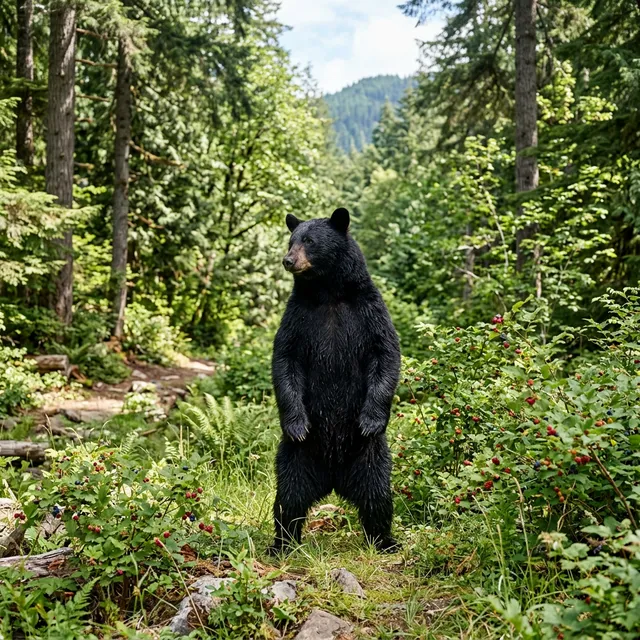
Bear
Bear Hunting License: Cost, Season Dates & Best States (2026)
Compare bear hunting license costs, extra permits, and season dates across 29 states.
States 29 Allow bear hunting
Resident Add-On $34 Separate paid entries in 17 states
Non-Resident Add-On $241 Separate paid entries in 17 states
Draw Required 6 States Lottery/draw required
Editorial review
Reviewed by Kevin Luo, editor and verification lead, for Bear permit, tag, stamp, season, and state-comparison guidance.
Source coverage reviewed August 17, 2026
TAG COST CHECK
Bear Hunting Tag Cost
Use this before the full state table when you need the likely bear license, tag, draw, or permit budget.
Separate paid entries in 17 of 29 states.
New Jersey has the lowest paid non-resident bear entry in this table.
Alaska is the highest paid non-resident bear entry in this table.
True total cost usually means base hunting license + bear tag or permit + any other stamps, draw applications, access permits, or reporting requirements. Bear non-resident tag or permit costs start around $2 in New Jersey and reach $450 in Alaska. 12 states require checking state notes because a zero-dollar table entry can mean bundled privileges, no separate listed charge, or a license package rather than a free standalone tag. 6 states require a draw or lottery step, so budget planning should start before the season opens.
Use this species-specific page for bear permits, tags, seasons, and draw context. For state-specific base license rules, open the matching state page. Use the calculator when the next step is estimating the full license and permit cost.
OVERVIEW
Bear Hunting in the United States
Bear hunting is available in approximately 30 US states, targeting primarily American black bears — the most widespread bear species with an estimated continental population of 900,000+ animals. Black bears range from Alaska and the Pacific Northwest to the Appalachian Mountains. Alaska is the only state offering brown/grizzly bear hunting. Hunting methods vary widely by state and are often regulated differently: spot-and-stalk, baiting (legal in ~9 states), hound hunting (~12 states), and still hunting. Spring and fall seasons are typical, with fall hunts targeting bears during hyperphagia — their intense pre-hibernation feeding period. Some eastern states list no separate bear tag price in this table because bear access is handled through the base or big-game license layer, while Alaska brown bear can reach $1,000 for non-residents. Several western states allocate tags through draw/lottery systems. Bear populations are carefully managed by state wildlife agencies to balance conservation with human-wildlife conflict.
Bear Hunting License Costs: License-Layer States, Western Black Bear Tags, and Alaska Brown Bear
Bear tag costs span an enormous range across US states. In many eastern states, this table lists no separate bear tag price because bear access is handled through the base hunting license or big-game license layer; hunters still need the qualifying license and any method, season, or reporting requirements. New Jersey charges the lowest separate bear tag fee in the country at just $2 (resident and non-resident). Pennsylvania's bear license is $16.97 resident / $36.97 non-resident as an add-on to the general license. Maine's permit path lists a $10 resident bear permit when required and a $74 non-resident bear permit for bait, hounds, or traps.
Western state bear tags are higher. Montana offers OTC black bear tags at $20 resident / $350 NR. Wyoming charges $40 resident / $287 NR. Colorado bear license is $64.01 resident / $302.56 non-resident, with access still depending on hunt code, unit, limited licenses, leftovers, or reissues. Idaho lists black bear tags at $13.75 resident / $231.75 non-resident before the required license and access items, with baiting and hound hunting allowed in some zones. Arizona requires a draw permit ($27.50 resident / $160 NR) for its limited Mogollon Rim hunt. Michigan and Minnesota both use lottery draw systems ($15/$150 and $44/$247 respectively). Alaska charges $450 NR for black bear and $1,000 NR for brown/grizzly bear, with guide rules for non-resident brown/grizzly hunters.
Most draw states charge a non-refundable application fee separate from the tag price. Michigan's UP bear draw application requires a $5 fee; successful applicants then pay the $15 resident / $150 NR permit. Minnesota's lottery application is $10. Utah's limited-entry draw ($83 resident / $333 NR) uses a bonus point system. Wisconsin issues harvest permits by lottery for its 3-method bear season in northern Wisconsin ($49 res / $160 NR). For hunters who want guaranteed annual bear hunting without draw uncertainty, Pennsylvania and Maine in the East, and Idaho and Montana in the West, provide OTC options with no draw required.
Baiting, Hound Hunting, and Spot-and-Stalk: Three Distinct Approaches
Bear hunting methods are more regulated than almost any other game species in North America, with states falling into distinct categories. Bear baiting — placing food attractants at a site to attract and pattern bears — is legal in approximately 9 states: Alaska, Idaho, Maine, Michigan, Minnesota, New Hampshire, Washington, Wisconsin, and Wyoming. Baiting produces the highest success rates of any bear hunting method (25–40% nationally; skilled baiters in Maine report 30–50%+ success). A typical bait site uses buckets or barrels filled with grain, pastries, or other high-calorie foods, positioned near a tree stand. Season-long baiting requires significant pre-season effort with regular bait replenishment.
Hound hunting uses trained dogs to track and tree bears, allowing hunters to pursue bears over large territories. Hound hunting is legal in approximately 12 states: Virginia, West Virginia, North Carolina, Maine, Idaho, Wisconsin, Wyoming, New Hampshire, Arkansas, and parts of Montana and Utah. Hound hunters typically drive roads until dogs pick up a fresh bear track, then run the pack. Hunts can cover miles over rugged terrain and may result in a treed bear within hours or extend over multiple days. Hound hunting success rates rival baiting. California, Colorado, Oregon, and Washington have all banned hound hunting through voter initiatives.
Spot-and-stalk is the primary method in states that have banned both baiting and hounds: California (non-toxic shot required statewide), Colorado (archery OTC September, rifle by draw), Montana (no baiting, no hounds), and Oregon (spring baiting banned 2025). In western states, glass-and-stalk hunting in oak brush, berry patches, and along mountain slopes requires patience and scouting. September and October are ideal for spot-and-stalk as bears enter hyperphagia — their pre-hibernation feeding phase — and become more predictable in their movement to food sources including manzanita berries, whitebark pine nuts, acorns, and corn fields. California produces a significant annual black bear harvest (over 1,500/year) entirely through spot-and-stalk.
Spring vs. Fall Bear Seasons, and Black Bear vs. Brown/Grizzly
Bear seasons divide into two primary periods: spring (April–June) and fall (August–December). Spring seasons are available in Alaska, Idaho, Montana, Oregon, Washington, and Wyoming. Spring hunts target bears emerging from hibernation when they are concentrated in low-elevation areas seeking early green-up vegetation and carrion. Spring bear hides are in prime condition before insects and rubbing cause hide damage. Fall seasons coincide with hyperphagia, when bears consume up to 20,000 calories per day to build fat reserves for hibernation — fall bears are heavier, more predictable, and often feeding in visible locations. Most eastern states offer fall-only seasons. Some western states (Idaho, Montana, Wyoming) offer both spring and fall.
All black bear hunting in the contiguous 48 states targets American black bears (Ursus americanus). The estimated continental population exceeds 900,000 animals, making black bears the most abundant bear species in North America. Brown bears and grizzly bears (Ursus arctos) are protected under the Endangered Species Act in the lower 48 states — hunting grizzly bears south of Canada is not legal. The only huntable brown/grizzly bears in the US are in Alaska, where the population is approximately 30,000. Alaska charges $1,000 NR for a brown bear tag, and non-resident hunters are legally required to hire a registered Alaska guide. Alaska's black bear (Ursus americanus) are OTC at $450 NR with no guide requirement.
In states where both grizzly and black bear ranges overlap — portions of Montana, Wyoming, Idaho, and Washington — hunters must positively identify the species before shooting. Misidentifying a grizzly bear as a black bear is a serious federal offense under the Endangered Species Act. Both species can be black, brown, cinnamon, or blonde in color — key identification features include the grizzly's prominent shoulder hump, dished facial profile, and short rounded ears versus the black bear's straight facial profile, taller ears, and absent shoulder hump. All states require mandatory harvest reporting for black bears, typically within 24–48 hours, and many require biological sample collection (tooth extraction for age determination).
REQUIREMENTS
What Bear Hunters Need Beyond the Base License
Tags, extra permits, stamps, and draw rules that commonly apply.
Bear hunting requirements vary by state and hunting method. Most states require a valid hunting license plus either a separate bear tag or a bear privilege handled inside the base or big-game license layer. When this table shows no separate bear tag price, that does not mean no purchase is needed: hunters still need the qualifying license and any method, season, reporting, or access permits. Key regulations: (1) Hunter education certification required in all states. (2) Hunting methods are heavily regulated — baiting is allowed in ~9 states (ME, ID, WI, WY, MI, MN, NH, WA, AK) and banned in others (CO, CA, MT, OR). (3) Hound/dog hunting is legal in ~12 states (ME, ID, WI, VA, WV, NC, NH, WY, AR, and parts of MT and UT) and banned in many. (4) All states prohibit harvest of sows with cubs. (5) Spring season hunters must positively identify species to avoid protected grizzly bears in overlapping ranges. (6) Harvest reporting within 24–48 hours is mandatory in most states, often with biological data collection (tooth extraction for aging).
Plan the Full Purchase
Start with the base hunting license, then layer in the species tag, migratory bird permit, draw application, or season-specific stamp that applies to your bear hunt.
SOURCES
Bear Hunting Official Sources
These sources support the Maine, Idaho, Pennsylvania, Colorado, and Alaska bear cost and access planning summaries highlighted on this page. Other state rows remain planning summaries and should be checked against the current state agency before purchase.
COST COMPARISON
Bear Hunting License Cost by State
Compare bear tag and permit fees across 29 states for the 2026 season.
TOP PICKS
Best States for Bear Hunting
Expert-recommended destinations for bear hunters.
#1
Maine
Maine is the #1 Eastern black bear hunting destination with 35,000+ bears and the highest bear harvest in the Eastern US. Uniquely, Maine allows three hunting methods in separate seasons: baiting (Aug–Sep), hound hunting (Sep–Oct), and general/still hunting (Oct–Nov). The current permit path lists a $10 resident permit when required, and a $74 non-resident bear permit for bait, hounds, or traps. Success rates over bait average 25–30%, making it one of the most productive bear hunts in the country.
#1 Eastern bear state — 35,000+ bears, 3 hunting methods, $74 NR permit
#2
Idaho
Idaho offers excellent bear hunting value with black bear tags listed at $13.75 resident / $231.75 non-resident before the required license and access items. Spring (Apr–Jun) and fall (Aug–Nov) seasons give hunters two planning windows. Hound hunting and baiting are allowed in some zones, and spring hunts over bait can be productive when unit rules allow it.
Spring & fall seasons + baiting and hound hunting allowed in some zones
#3
Pennsylvania
Pennsylvania harvests thousands of bears annually and does not use a statewide bear draw. Bear licenses are $16.97 resident / $36.97 non-resident and must be added to the general hunting license. The Pocono Mountains and north-central PA remain the core planning regions, with season timing and WMU rules set by the Pennsylvania Game Commission.
No statewide bear draw; $36.97 NR bear license add-on
#4
Colorado
Colorado's black bear planning starts with a bear license listed at $64.01 resident / $302.56 non-resident. Access depends on the current hunt code and unit because Colorado mixes OTC opportunities, limited licenses, and leftover or reissued licenses. Baiting is not legal, so hunters usually plan around spot-and-stalk conditions in oak brush, aspen, and berry habitat.
$302.56 NR bear license; hunt-code and unit access matter
#5
Alaska
Alaska is the only state offering both black bear and brown/grizzly bear hunting. Non-resident black bear locking tags are $450, while brown/grizzly bear locking tags are $1,000 and non-resident hunters must use a registered guide or qualifying resident relative. That makes Alaska the highest-upside, highest-complexity bear destination in this comparison.
NR black bear $450; brown/grizzly $1,000 with guide requirement
SEASONS
Bear Hunting Season Dates by State
Season dates, weapon types, and regulations at a glance.
FAQ
Frequently Asked Questions About Bear Hunting Licenses
What is the true total cost to hunt bear?
The true total cost for bear is the qualifying license plus the bear tag, big-game privilege, draw application, or method permit your state requires. Some eastern states handle bear access inside the base or big-game license layer, while New Jersey has a separate $2 tag, Pennsylvania is about $36.97 for non-residents, and western non-resident black bear tags can run from $231.75 in Idaho to about $302.56 in Colorado before required license, access, application, or hunt-code steps. In Alaska, black bear is $450 non-resident and brown/grizzly bear is $1,000 with a guide requirement.
Which states allow bear baiting?
Bear baiting (placing food attractants to draw bears) is legal in approximately 9 states: Alaska, Idaho, Maine, Michigan, Minnesota, New Hampshire, Washington, Wisconsin, and Wyoming. Baiting is banned in California, Colorado, Montana, Oregon, and most eastern states. Where allowed, baiting is the most effective hunting method with 25–40% success rates. Bait season typically opens several weeks before the general firearms season.
Which states allow hound hunting for bears?
Bear hunting with hounds (dogs) is legal in approximately 12 states: Virginia, West Virginia, North Carolina, Maine, Idaho, Wisconsin, Wyoming, New Hampshire, Arkansas, and parts of Montana and Utah. Hound hunting has been banned in California, Oregon, Washington, and Colorado. Hound hunting with experienced dogs produces very high success rates, and many outfitters specialize in guided hound hunts.
When is bear hunting season?
Bear seasons vary by state. Spring seasons (Apr–Jun) are available in Alaska, Idaho, Montana, Oregon, Washington, and Wyoming — targeting bears emerging from hibernation. Fall seasons (Aug–Dec) are more common and coincide with hyperphagia (pre-hibernation feeding). Maine has the earliest fall opener (late August for bait). Most eastern states have October–December seasons. Dates vary by unit and method within each state.
Can non-residents hunt bears?
Yes — almost all bear hunting states welcome non-residents. Tags range from $36 (PA) to $1,000 (AK brown bear). Alaska requires non-residents to hire a registered guide for brown/grizzly bear hunts. No states restrict bear hunting to residents only, making it one of the most accessible big game opportunities for out-of-state hunters. Pennsylvania and Maine are the most popular non-resident bear destinations in the East.
Is bear meat edible?
Yes, bear meat is edible and nutritious but must ALWAYS be cooked to at least 165°F internal temperature to kill Trichinella parasites, which are common in bears. Spring bear meat is generally milder in flavor, while fall bears fed on berries and mast produce sweeter-tasting meat. Bear fat renders well for cooking. Never eat bear meat raw or undercooked — trichinosis is a serious risk.
What states have the most bears?
Alaska leads with an estimated 100,000+ black bears and 30,000 brown/grizzly bears. In the lower 48, the largest black bear populations are: Maine (35,000+), California (25,000–35,000), Wisconsin (28,000), Pennsylvania (18,000+), Colorado (17,000–20,000), and New York (8,000+). The total continental US black bear population exceeds 900,000.
What is the difference between black bear and grizzly bear hunting?
Black bear hunting is available in ~30 states with OTC tags in many. Brown/grizzly bear hunting is only available in Alaska and is significantly more expensive ($1,000 NR tag + required guide). Grizzly bears are federally protected in the lower 48 states and cannot be hunted. Always positively identify species before shooting in areas where ranges overlap — misidentifying a grizzly as a black bear is a serious federal offense.