
Start here if you only need the next season window
Use this page as a Season Finder workflow for broad date questions such as NY hunting season 2026-2027, dove season 2026, dove season GA 2026, and deer season GA or NC 2026-2027. Start with the state/species/date lookup as a planning estimate, then verify the official agency notice remains the legal authority before buying a license, tag, or travel.
The second 2026 big game controlled hunt drawing application period is open for eligible leftover hunts.
Leftover license sales started August 4, 2026, with reissued licenses entering the weekly process from August 11.
Deer, turkey, dove, duck, and elk seasons use different calendars and permit systems.
Older season structures help plan timing but are not legal authority for the next license year.
Hunting Seasons 2026–2027: August 6, 2026 Status

The 2026–2027 hunting season is now published in more states, but agencies still release draw results, leftover tags, reissued licenses, migratory-bird selections, and regulation booklets on different schedules. Treat older date tables below as planning baselines only where a current agency release is not linked.
August 6, 2026 status: Idaho's second big game controlled hunt drawing application period runs August 5 – 15, 2026. Colorado leftover license sales started August 4, 2026, and the reissue process begins adding eligible licenses to the weekly list from August 11. This is a post-primary-draw planning moment: leftover licenses, second drawings, and reissued licenses matter more than expired spring deadlines.
Published regulation updates: New York has released its 2026–2027 Hunting and Trapping Regulations Guide, and the 2026–2027 Federal Duck Stamp is the current July 1, 2026 – June 30, 2027 stamp-year item. Remaining state, zone, unit, and migratory-bird tables still require a final agency check before applying, buying, or traveling.
Best next step: pick your species first, then confirm the state. Deer planners should start with our Deer Season by State guide; turkey, dove, duck, and elk hunters should use the species guides below; and anyone deciding where to hunt should pair this calendar with our Hunting Season Finder and individual state pages.
Key Season Dates at a Glance (2025–2026 Baseline)
The following 2025–2026 season examples are useful for early planning because many states keep similar calendar shapes from year to year. Treat them as a baseline, not legal authority for 2026–2027, until the relevant state wildlife agency posts the new regulation booklet:
Texas (TPWD) — Archery: Sep 27 – Oct 31, 2025. General deer (North Zone): Nov 1, 2025 – Jan 6, 2026. General deer (South Zone): Nov 1, 2025 – Jan 19, 2026. Muzzleloader: Jan 5–18, 2026. Mule deer (Panhandle): Nov 22 – Dec 7, 2025. Youth-only: Oct 24–26, 2025 & Jan 5–18, 2026.
Wisconsin (DNR) — Archery/Crossbow: Sep 13, 2025 – Jan 4, 2026. Gun deer (statewide 9-day): Nov 22–30, 2025. Muzzleloader: Dec 1–10, 2025. Youth hunt: Oct 11–12, 2025. Antlerless-only holiday hunt: Dec 24, 2025 – Jan 1, 2026.
Pennsylvania (Game Commission) — Archery (statewide): Oct 4 – Nov 21, 2025 & Dec 26, 2025 – Jan 19, 2026. Antlerless muzzleloader: Oct 18–25, 2025. Regular firearms: Nov 29 – Dec 13, 2025. Flintlock: Dec 26, 2025 – Jan 19, 2026. Expanded Sunday hunting: 13 Sundays from Sep 14 – Dec 7, 2025 (enabled by Act 36 of 2025, which fully repealed PA's Sunday hunting ban).
Colorado (CPW) — Archery elk/deer: late Aug – Sep (varies by GMU). Rifle elk: Oct – Nov across four rifle seasons. Note: Major OTC tag changes for 2025–2026 season — see "What Changed" section below.
Michigan (DNR) — Archery: Oct 1, 2025 – Nov 14, 2025 & Dec 1, 2025 – Jan 1, 2026. Firearm: Nov 15–30, 2025. Muzzleloader (Zone 1 & 2): Dec 6–21, 2025. Late antlerless firearm: Dec 22, 2025 – Jan 1, 2026 (private land only in select DMUs).
Georgia (WRD) — Archery: Sep 13 – Oct 10, 2025. Primitive weapons: Oct 11–17, 2025. Firearms: Oct 18 – Jan 11, 2026 (varies by zone). Extended archery in some counties through Jan 31, 2026.
For all 50 states, visit our state pages to move from broad calendar timing into state-specific license, tag, and agency links.
What Changed for the 2025–2026 and 2026 Seasons
Several significant regulatory changes affect hunters in the current and upcoming seasons:
Colorado OTC elk tag eliminations — Starting in 2025, Colorado Parks and Wildlife (CPW) eliminated non-resident OTC archery elk tags for most Game Management Units (GMUs) west of I-25 and GMU 140. Beginning in 2026, OTC bull elk tags for the 2nd and 3rd rifle seasons in GMUs 54, 55, and 551 (northern Gunnison Basin) were also eliminated. The entire Gunnison Basin is now under a fully limited license system. Non-resident OTC archery elk tags remain available only for specific units east of I-25 (hunt codes E-F-133-U1-A and E-E-087-U1-A). Non-resident OTC rifle elk tags are still available for 2nd and 3rd rifle seasons in many western units outside the Gunnison Basin. Looking ahead, Colorado is planning a 50/50 split draw system and standardized 25% non-resident allocation for 2028.
Pennsylvania expanded Sunday hunting — Governor Josh Shapiro signed Act 36 of 2025 on July 9, 2025, fully repealing Pennsylvania's longstanding Sunday hunting ban. The Game Commission approved 13 Sunday hunting dates for the 2025–2026 season (Sep 14 – Dec 7, 2025). On these Sundays, any game in season may be hunted except migratory game birds. Hunters on private land must carry written permission from the landowner.
New Jersey fall turkey closure — The NJ Fish and Game Council voted on March 11, 2025 to close the fall either-sex turkey season statewide, citing continuously declining wild turkey harvest trends since the early 2000s. This reduces the total number of states with fall turkey hunting to 40 (per NWTF). The closure aims to improve hen survival and reproduction.
Always verify changes with your state's official wildlife agency before planning your hunt.
2026 Big Game Draw Deadlines — August Leftover and Second-Draw Check
If you are planning a Western big game hunt for fall 2026, the calendar is now a mix of closed primary draws, active application windows, upcoming resident deadlines, and later leftover-license opportunities. Missing a primary draw does not always end the season plan, but it changes the backup path.
Wyoming — Non-resident elk: deadline was February 2, 2026 (closed). Resident elk and all deer: June 1, 2026. Non-resident elk applicants can modify applications until May 8, 2026.
New Mexico — Big game draw applications for elk, deer, pronghorn, oryx, and ibex closed in March 2026. If you missed the draw, check leftover, returned tag, and private-land options before assuming the hunt is impossible.
Montana — Big game, elk, and deer combination applications closed April 1, 2026. Deer B and Elk B permits commonly sit on a separate June deadline, so hunters should verify the exact permit type before writing off the year.
Colorado — Primary draw for elk, deer, pronghorn, bear, and moose ran March 1 – April 7, 2026. Leftover license sales started August 4, 2026; from August 11, eligible returned and unpaid licenses can enter the weekly reissue process. Check the current CPW leftover and reissue lists before assuming a hunt code is still available.
Idaho — The first controlled hunt application window ran May 1 – June 5, 2026. The second big game controlled hunt drawing application period runs August 5 – 15, 2026 for eligible leftover deer, elk, pronghorn, and bear hunts, so hunters should verify the current hunt-number list before applying.
For detailed tag costs and state-specific requirements, check our individual state hunting license pages. Planning to hunt out of state? See our hunting license reciprocity guide to understand which credentials transfer between states.
2026–2027 Season Planning Answers
New York hunting season 2026–2027: DEC has published the 2026–2027 Hunting and Trapping Regulations Guide. For NY hunting season 2026 2027 schedule planning, start with the New York hunting season guide for the official guide/PDF verification path; use the New York state page for purchase rules and Deer Season by State if the main decision is the bow, firearm, or muzzleloader structure.
Georgia dove season 2026–2027: For dove season GA 2026 2027 planning, open the Georgia dove season guide for the license, GA Waterfowl Migratory Bird License/HIP credential, and split-season path. The current WRD migratory-bird flyer lists mourning dove segments of Sep 5 – Oct 11, Nov 21 – 29, and Dec 19 – Jan 31, 2027, but public fields and specialty hunts can use additional rules, so verify the WRD flyer and field listing before hunting.
Georgia deer season 2026–2027: For deer season GA 2026 2027 planning, the first decision is deer zone and weapon type rather than license purchase alone. Georgia commonly separates archery, primitive weapons, firearms, extended archery, and county-specific deer rules, so use this calendar to orient around the 2026 to 2027 hunting season, then use the Georgia deer season and license guide, the Georgia hunting license page, and Deer Season by State before buying or traveling.
Florida turkey season 2027: Florida turkey season 2027 planning usually means the next spring gobbler window, but Florida sets turkey timing by zone. Use the Florida turkey season guide for the spring-zone planning path, then confirm the final 2027 notice with FWC before buying licenses or permits.
Alabama turkey season 2027: Alabama turkey hunters should treat the current spring framework as a planning cue, not a locked 2027 date. Outdoor Alabama's 2025–2026 turkey season page shows why state context matters: spring timing can differ between national forest districts and the rest of the state, so start with the Alabama hunting license page before assuming one statewide opener tells the whole story.
New Jersey spring turkey season 2027 dates: New Jersey spring turkey season 2027 dates should stay on the season calendar until Fish & Wildlife publishes the final permit-period table. The current planning pattern is permit-period based rather than one statewide opener, and New Jersey also closed its fall turkey season, so route follow-up license questions to the New Jersey hunting license page.
When does dove season start 2026? Broad dove date planning should start here because federal frameworks and state split seasons do not produce one national opener. In many states dove opens in early September, but the exact answer for when does dove season start 2026 depends on the state, field type, and split date.
Tennessee turkey season 2027: Tennessee shows why spring timing needs state-specific confirmation. TWRA has confirmed April 4–5, 2026 for the Young Sportsman hunt and April 11 – May 24, 2026 for the statewide spring season, which makes the current Tennessee structure a useful baseline while hunters wait for the next full 2027 update on the Tennessee hunting license page.
Texas turkey season 2027: Texas is the cleanest example of why broad date planning needs zone context. TPWD has already published 2026–2027 turkey timing, including North Zone Apr 3 – May 16, 2027, South Zone Mar 20 – May 2, 2027, and East Zone Apr 22 – May 14, 2027. Hunters should still branch into the Texas hunting license page for county rules, tags, and zone context.
North Carolina deer season 2026–2027: For NC deer season 2026-2027 planning, the real decision is zone structure. The current pattern breaks deer into northeastern, southeastern, central, northwestern, and western seasons with separate archery, blackpowder, and gun windows, so use the North Carolina deer season guide first, then confirm the new digest before buying or traveling.
Kansas dove season 2026: Kansas dove season 2026 planning starts with migratory-bird frameworks and state split selections, not one national opener. Use this calendar to confirm the federal/state split logic, then branch to Kansas hunting license for HIP, license, and field-access details or to the Dove Hunting License guide for species-specific costs.
Arkansas deer season 2026–2027: For AGFC 2026 2027 deer season schedule and Arkansas 2026-2027 deer season planning, use this calendar until Arkansas posts the final AGFC schedule PDF or season table. Deer follow zone and weapon structures, so use Arkansas hunting license for license and tag context, then verify exact zone dates with AGFC before buying.
South Carolina deer season 2026–2027: South Carolina deer planning is usually a game-zone question. The right planning path is this calendar first, then the South Carolina hunting license page for game zones, tags, and resident/non-resident costs.
Wisconsin gun deer season 2026: Wisconsin gun deer planning usually means the statewide 9-day firearm season plus any youth, muzzleloader, holiday, or antlerless structure around it. Use Wisconsin hunting license for license-year and Go Wild details, then confirm the final 2026 gun deer dates in the DNR season notice.
Maryland hunting season 2026–2027 schedule: Maryland season planning needs species first because deer, turkey, black bear, waterfowl, and sika deer use different tables. Start with this calendar, then use the Maryland hunting license page when the decision becomes stamps, sika deer, managed hunts, or official purchase rules.
Muzzleloader season: Generic muzzleloader season planning almost never leads to one national date. Hunters usually need the state and species combination, especially for deer. Use our Deer Season by State guide for the best national comparison, then narrow the answer with the Hunting Season Finder or the matching state page.
2026 to 2027 hunting season dates: Treat this as a planning path, not one national date. The right answer is the combination of species, state, weapon, zone, license year, and whether the agency has already published the final 2026–2027 table. Use this page to choose the correct state/species route, then verify the final date with the state wildlife agency.
Deer Season Dates by State

Deer hunting is the most popular hunting activity in America. Most states break deer season into archery, firearm, and muzzleloader segments. Here's how season timing compares across key state examples; confirm the final current-year table with the state agency before hunting:
Archery season opens first — ranging from mid-September (Wisconsin: Sep 13) to early October (Pennsylvania: Oct 4). Archery seasons are the longest, often running 2 to 4 months. Wisconsin's archery/crossbow season runs nearly four months through Jan 4.
Firearm season timing varies dramatically. Wisconsin's iconic gun season is just 9 days (Nov 22–30). Pennsylvania's regular firearms runs 15 days (Nov 29 – Dec 13). Texas's general season runs over two months (Nov 1 – Jan 6/19 depending on zone). Southern states like Alabama and Georgia often extend into January or February.
Muzzleloader season is usually a short 1–2 week window. Pennsylvania: Oct 18–25. Wisconsin: Dec 1–10. Texas: Jan 5–18.
Late seasons offer bonus opportunities in December through February. Pennsylvania has extended firearms in select WMUs (Dec 26 – Jan 24). Wisconsin runs a holiday antlerless hunt Dec 24 – Jan 1.
For detailed deer season info including license costs and tag prices, see our deer hunting license guide. Key state pages: Texas (longest season), Wisconsin (famous 9-day gun season), and Pennsylvania (newly expanded Sunday hunting).
For state deer planning where the season choice depends heavily on terrain, draw timing, or zone structure, branch into the dedicated pages for Utah deer permits and seasons, North Dakota deer lottery planning, Alaska deer season and tag rules, Maryland deer regions and stamps, or Idaho deer general-season and controlled-hunt options before choosing dates.
Elk Season Dates by State
Elk hunting is concentrated in Western states — Colorado, Montana, Wyoming, Idaho, Oregon, and New Mexico. Here's how the 2025–2026 season timing compares:
Archery elk season opens first, typically in late August to mid-September, coinciding with the elk rut (breeding season). Colorado and Montana open in late August. Idaho and Wyoming typically open in early September.
Rifle elk season runs October through November. Colorado has four separate rifle seasons each lasting about 9 days. Montana's general season runs five weeks from late October through late November. Wyoming's general season varies by hunt area.
Tag requirements — Most elk tags require a draw/lottery system. Colorado's 2026 primary draw runs March 1 – April 7. In many premium units, non-resident draw odds are under 5%. Note: Colorado's OTC elk tag availability has changed significantly — see the "What Changed" section above for details on the 2025–2026 OTC eliminations.
For elk tag costs and state-by-state breakdown, see our elk hunting license guide.
Turkey Season Dates by State
Turkey hunting has two distinct seasons — spring and fall. Here's the timing breakdown:
Spring turkey season runs from mid-March through late May. Southern states open first — Alabama, Mississippi, and Georgia typically start in mid-March. Northern states like Wisconsin, Pennsylvania, and New York open in late April or early May. Only male turkeys (toms/gobblers) may be harvested. Spring seasons typically last 4 to 6 weeks, with many states splitting them by zone.
Fall turkey season is available in 40 states as of 2025 (per NWTF — New Jersey closed its fall season in 2025), typically from October through December. Both sexes may usually be harvested. Bag limits tend to be more liberal than spring.
Top turkey hunting states include Missouri, Alabama, Mississippi, and Tennessee. For turkey tag costs and season details, see our turkey hunting license guide.
Waterfowl (Duck and Goose) Season
Waterfowl seasons are set within a federal framework by the US Fish and Wildlife Service (USFWS). States choose their specific dates within federal windows:
Duck season — The federal framework allows up to 60 days between late September and late January. Most states split this into 2 to 3 segments. Daily bag limits are typically 6 ducks with species-specific sub-limits (e.g., 2 mallard hens, 1 pintail).
Goose season — Canada goose seasons vary widely, with early resident goose seasons opening as early as September 1. Regular seasons run October through February. Light goose conservation seasons extend into March.
Required permits — Beyond your state hunting license, waterfowl hunters age 16 and older need the 2026–2027 Federal Duck Stamp ($25), valid July 1, 2026 – June 30, 2027, plus any state waterfowl stamp and Harvest Information Program (HIP) registration that applies.
The Pacific, Central, Mississippi, and Atlantic Flyways each have different season structures and bag limits. For more details, see our duck hunting license guide.
Dove and Small Game Season
Small game seasons are often the longest and most accessible — ideal for beginners and budget-conscious hunters since they typically require only a basic hunting license:
Dove — Mourning dove season opens September 1 in many states, marking the start of fall hunting. The federal USFWS framework sets a daily bag limit of 15 doves (mourning and white-winged combined), with a possession limit of three times the daily bag. Dove season runs in 2 to 3 splits from September through January.
Pheasant — Opens in October, runs through December or January. South Dakota is the top pheasant destination, followed by Kansas, Iowa, and Nebraska. See our pheasant hunting license guide.
Quail — Seasons run October through February in southern states. Bobwhite quail hunting is popular in Texas, Oklahoma, Kansas, and Georgia.
Rabbit and Squirrel — Among the longest seasons, often September through February or year-round in some states. Excellent for new hunters learning field skills.
See our dove hunting license guide for state-by-state information.
Bear Season Dates by State
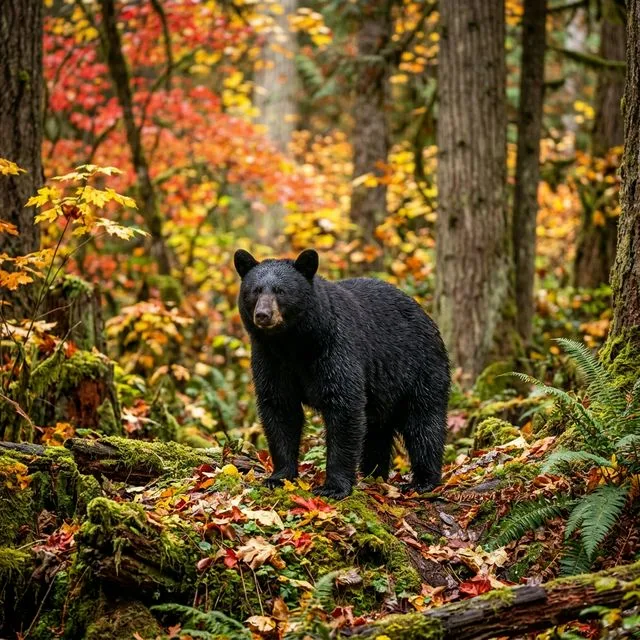
Bear seasons are more limited and vary significantly by state. Here's what you need to know:
Black bear seasons typically run September through November. Legal hunting methods vary significantly by state — baiting is allowed in Maine, Wisconsin, and Michigan; hound hunting in Virginia, Idaho, and Montana; Colorado is spot-and-stalk only. These method restrictions are a major factor in choosing where to hunt.
Top states for bear hunting: Pennsylvania (over 4,000 bears harvested annually, OTC tags with no draw required), Michigan, Wisconsin, Maine, Idaho, and Montana.
Most bear hunts require a separate tag or permit, and many states use a draw/lottery system. Pennsylvania stands out for offering over-the-counter bear tags, making it one of the most accessible states for bear hunting. For bear tag costs, see our bear hunting license guide.
Wild Hog & Predator Hunting: Year-Round Seasons
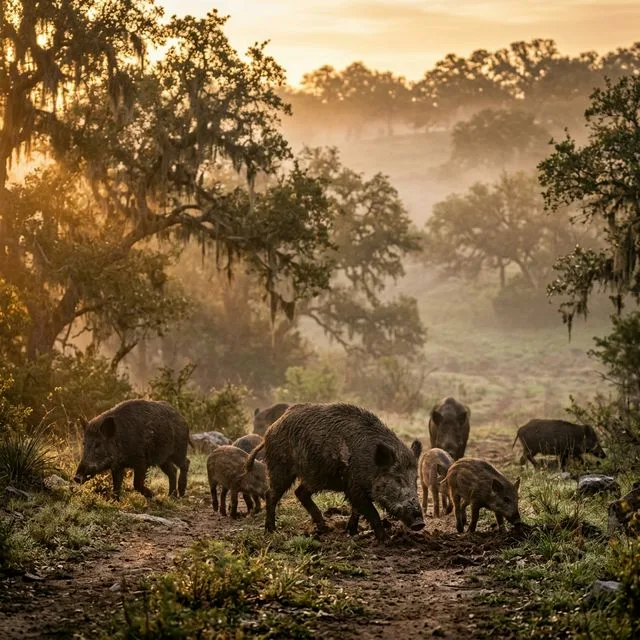
While most hunting seasons are limited to specific windows, feral hog and predator hunting offer year-round opportunities in many states — making them ideal for hunters who want to stay active between traditional seasons.
Feral hog hunting is open year-round on private land in many southern and western states, including Texas, Oklahoma, Georgia, Florida, Alabama, Mississippi, Arkansas, Louisiana, South Carolina, and California. Private-land license exceptions can apply in places such as Texas or Florida for specific hog-control situations, but hunters still need landowner permission and should verify the current state rule before assuming no license path applies. Most of these states have no bag limit on feral hogs due to their status as a destructive invasive species. The USDA estimates feral hogs cause over $2.5 billion in agricultural damage annually across the US.
Night hunting for hogs is permitted in many of these states on private land — Texas, Georgia, Oklahoma, Mississippi, and South Carolina all allow night hunting with landowner permission. Some states require notifying local law enforcement before night hunting. Night vision and thermal optics are legal in most states for hog hunting.
Coyote hunting is open year-round in the majority of US states with no bag limit. Most states classify coyotes as non-game or predator animals. Popular methods include calling (distress calls, howling), spot-and-stalk, and hunting with dogs. Some states like Texas and Oklahoma also allow year-round hunting of other predators including feral cats and certain furbearers.
For hunters looking to keep their skills sharp during the off-season, hog and predator hunting provide affordable, accessible opportunities without the draw applications and limited tags associated with big game. See our wild hog hunting license guide for state-by-state rules.
Month-by-Month Hunting Calendar
Use this monthly reference to plan your year. It shows the normal season rhythm first, then points out where 2026–2027 dates still need a state-level confirmation:
January – February: Late deer seasons (TX South Zone closes Jan 19, AL through Feb 10). Late archery. Waterfowl winding down. Light goose conservation seasons opening. Coyote hunting year-round in most states.
March – April: Spring turkey opens in the South, snow goose conservation seasons remain active in some flyways, and many Western primary draw deadlines close before fall hunters are thinking about opening day.
May – June: Spring turkey wraps up in northern states. Idaho controlled hunts run May 1 – June 5, several Western permit deadlines land around June 1, and many agencies publish or update the next regulation booklet.
July – August: New license years and stamp years often begin around July 1. Leftover lists, secondary draws, and returned tags become important. Early archery elk and deer preparation begins for late-August and September openers where dates are confirmed.
September: Dove season opens (Sep 1 in many states). Archery deer opens: WI (mid-Sep), TX (late Sep). Archery elk at peak rut. Early goose. Teal season. Squirrel season opens in the East.
October: Peak archery deer. Pheasant opens (SD, KS, IA, NE). Quail opens in the South. Muzzleloader in PA (mid-Oct). Bear seasons in PA, MI, WI, ID.
November: Peak firearm deer nationwide. WI 9-day gun season (late Nov). PA firearms (late Nov – mid Dec). TX general in full swing. Peak waterfowl migration. Rifle elk in CO, MT.
December: Late muzzleloader (WI Dec 1–10, PA flintlock Dec 26+). Waterfowl late splits. WI holiday antlerless hunt (Dec 24 – Jan 1). Many seasons close Dec 31.
Season-readiness gear categories
Use the calendar to pick the right window, then compare only the practical categories that match early mornings, changing weather, and public-land safety.
Best for readers who have narrowed the season window and are preparing for opening week.
Browse the hunting gear category Blaze orange vest / hat
High-visibility outer layer for orange-required seasons and public-land safety rules.
Natural on beginner, deer, season, and state-compliance pages.
Tools for this stepHunting day pack
Carry layer, water, first aid, light, map, and basic field kit without overpacking.
Natural on public-land, beginner, and season-readiness pages.
Tools for this stepHeadlamp
Hands-free light for pre-dawn access, field dressing, and getting back to the vehicle.
Fits season planning, first-hunt, and field-prep content.
Tools for this stepWeatherproof notebook
Useful for jotting down stand numbers, times, access notes, and unit reminders.
Natural on beginner and season-planning pages.
Tools for this stepLicense / tag wallet
Keeps licenses, tags, and emergency contact slips dry in the field.
Fits first-hunt, season-planning, and out-of-state trip prep.
Tools for this stepWaterproof hunting boots
Broken-in boots matter more than extra gadgets on long sits, wet ground, and public access.
Fits first-hunt, public-land, and season pages.
Tools for this stepPackable rain gear
Light rain layer for changing fall weather, long hikes, and opening-week sits.
Best on season calendars, public-land pages, and first-trip preparation.
Tools for this stepInsulated hunting gloves
Cold-weather category for late-season sits, glassing, and morning access walks.
Fits season-readiness and deer-season planning pages.
Tools for this stepCompact first aid kit
Small trauma-aware kit for day hunts, range days, and remote access routes.
Relevant on safety, beginner, and season-readiness pages.
Tools for this stepHand warmers
Low-cost cold-weather comfort for late-season sits and frosty mornings.
Best on season calendar and first-hunt pages.
Tools for this stepInsulated thermos
Keeps coffee or soup warm during long cold sits or pre-dawn starts.
Fits season-readiness and beginner pages.
Tools for this stepCompact compass
Simple backup navigation for paper map use and low-service areas.
Strong on public-land and season-planning pages.
Tools for this stepCompact binoculars
Entry-level glass for scouting, identifying movement, and checking terrain.
Fits beginner, deer, public-land, and scouting content.
Tools for this stepHunting License Year: When to Buy & Renew
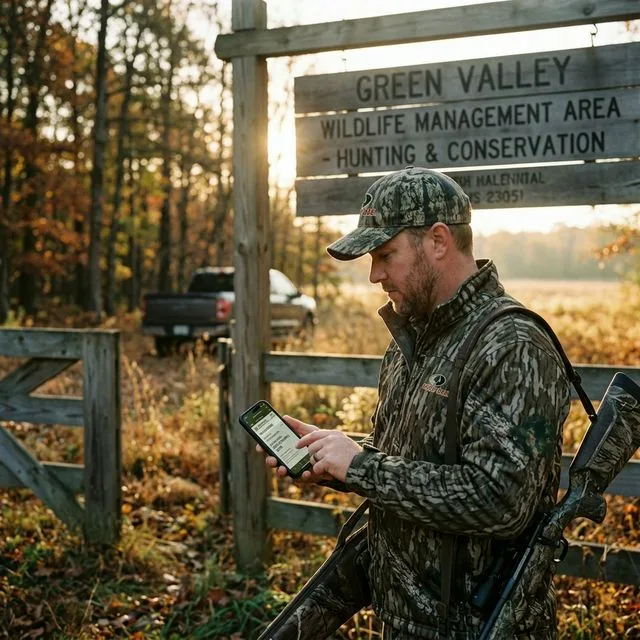
Understanding your state's license year is critical for planning. Hunting licenses are not purchased on a calendar year — each state sets its own license year, and buying at the wrong time can mean paying for a license that expires before your season opens.
Most common license year: July 1 – June 30. This is the standard in states like California, Montana, and many others. The Federal Duck Stamp ($25) also follows this period. If you buy on June 15, you're paying for just two weeks of validity.
April 1 – March 31: Several states including Wisconsin and Colorado use this cycle. Wisconsin's Go Wild system automatically sets your license to expire on March 31.
Calendar year (Jan 1 – Dec 31): Some eastern states like Pennsylvania, Ohio, and Michigan use a calendar year format.
Date of purchase + 365 days: A few states issue licenses valid for one year from the date of purchase, giving you maximum flexibility.
Pro tip: Buy your license as close to the start of the new license year as possible to maximize value. Set a calendar reminder for your state's renewal date — many states offer early-bird purchase options. For specific renewal procedures, see our hunting license renewal guide.
How to Find Your State's Exact Season Dates
Season dates change every year and vary by region, weapon type, public/private land, species, and unit. The safest workflow is to use this page for planning, then verify the final date in the official state system before you buy or apply.
State wildlife agency websites are the final source for state-managed species such as deer, elk, turkey, bear, pheasant, and most small game. Every state publishes annual hunting regulations online, usually as a web page, PDF booklet, interactive calendar, or mobile app.
Federal migratory bird frameworks matter for ducks, geese, doves, rails, woodcock, and other migratory birds. The US Fish and Wildlife Service sets the outside framework, then states select season dates and splits inside that framework. That is why dove and waterfowl pages must be checked state by state.
Each of our 50 state pages includes hunting season overviews, license costs, and direct links to the state agency. High-interest season pages to check next include New York, Florida, Georgia, New Jersey, Colorado, and Idaho.
Frequently Asked Questions
Are 2026–2027 hunting season dates final yet?
Not everywhere. Some 2026 draw windows and state season tables are already published, but many 2026–2027 hunting season dates are released in late spring or summer through state regulation booklets, commission approvals, or agency notices. Use this calendar to plan the likely window, then verify the final date with the state wildlife agency before buying a license, applying for a tag, or booking travel.
When does deer hunting season start in 2026?
For the 2026–2027 season, many states have now published official deer dates, while some unit, county, emergency, or special-hunt tables still update separately. Use the current state regulation booklet first; use older season shapes only as a planning clue, then confirm the exact weapon, zone, and unit dates before buying or traveling.
Can I hunt year-round in any state?
No state allows year-round hunting for major game species like deer, elk, or turkey. However, feral hog hunting is open year-round in at least 10 states: Texas, Oklahoma, Georgia, Florida, Alabama, Mississippi, Arkansas, Louisiana, South Carolina, and California — most with no bag limits. Coyote hunting is also open year-round in the majority of US states. Some small game seasons like rabbit and squirrel run very long in certain states. These year-round opportunities are ideal for keeping your skills sharp during the off-season.
Do I need a separate license for each hunting season?
Your base hunting license typically covers all seasons within the license year. However, you will likely need additional tags, stamps, or permits for specific species: deer tags ($4–$50+), turkey permits ($10–$50), the Federal Duck Stamp ($25), state waterfowl stamps ($5–$25), and harvest permits. Check your state's requirements — our state pages detail every required license and stamp.
When do I need to apply for draw/lottery tags?
Draw applications are typically due in spring, well before hunting seasons open. For example, Colorado's 2026 primary draw application period runs March 1 – April 7, 2026. Montana and Wyoming draws are also typically in spring. Application deadlines vary by state and species — elk, moose, and bighorn sheep are the most common draw species. If you miss the primary draw, some states offer secondary draws or leftover tag sales.
How do I find exact season dates for my area?
Visit your state's official fish and wildlife agency website and download the current hunting regulations booklet (usually a free PDF). Season dates are typically published in spring or early summer. Many states also offer official hunting apps with interactive season calendars — examples include Texas "My Texas Hunt Harvest," Wisconsin "Go Wild," and Georgia "Outdoors GA." You can also check our state pages for an overview of key season dates and direct links to official sources.
When should I buy my hunting license for the best value?
Buy as close to the start of the new license year as possible. Most states use a July 1 – June 30 cycle, but some use April 1 – March 31 (Wisconsin, Colorado) or January 1 – December 31 (Pennsylvania, Ohio). Buying late in the cycle means paying full price for reduced time. The Federal Duck Stamp is valid July 1 – June 30 ($25). Check your state page for the specific license year dates.
What hunting seasons are typically open in spring?
Spring turkey season usually runs mid-March through late May, with southern states opening first. Light goose conservation seasons are active along some flyways through March or April. Predator hunting such as coyotes remains open in many states for long seasons or year-round. Feral hog hunting is also available year-round in several southern states, especially on private land. Spring is also prime draw application season because many Western big game deadlines occur between March and June.
Where should I verify official hunting season dates?
Verify state-managed species on your state wildlife agency website or official hunting app. For migratory birds such as ducks, geese, and doves, check both the federal framework and your state's final season selection. Our state pages link to agency sites and help you find the right license, tag, and season page before you commit to a hunt.
When are turkey and dove dates usually set?
Turkey dates are usually set by state wildlife agencies through annual regulation booklets or commission-approved season notices. Dove dates depend on the federal migratory bird framework first, then each state selects its season splits and final dates. For 2026–2027 planning, use the prior season as a calendar clue, but wait for the state agency release before treating any date as final.
Sources
Listed sources support current agency calendar releases, draw-deadline notices, and official 2026–2027 hunting or trapping guide pages for the linked states. They do not verify every local unit exception, emergency rule, or late-posted change without checking the destination agency page.
- https://www.fws.gov/hunting
- https://www.fws.gov/law
- https://www.fws.gov/event/2026-2027-duck-stamp-first-day-sale
- https://idfg.idaho.gov/
- https://idfg.idaho.gov/article/second-big-game-controlled-hunt-drawing-application-period-aug-5-15-1
- https://cpw.state.co.us/
- https://cpw.state.co.us/activities/hunting/big-game/leftover-remaining-and-reissued-licenses
- https://dec.ny.gov/
- https://dec.ny.gov/things-to-do/hunting/hunting-trapping-regulations
- https://www.nwtf.org/
- https://www.rmef.org/
- https://tpwd.texas.gov/
- https://dnr.wi.gov/
- https://www.pgc.pa.gov/
- https://www.michigan.gov/dnr/
- https://georgiawildlife.com/
- https://rules.sos.georgia.gov/gac/391-4-2
- https://tpwd.texas.gov/regulations/outdoor-annual/hunting/2026-2027-hunting-season-dates
- https://myfwc.com/hunting/by-species/turkey/hunt-without-quota-permit/
- https://www.outdooralabama.com/seasons-and-bag-limits/turkey-season
- https://www.tn.gov/twra/hunting/big-game/turkey.html
- https://www.eregulations.com/northcarolina/hunting/deer-hunting-seasons