
Why Do Hunting Tags Require a Draw?

Not all hunting licenses are available over the counter. For species with limited populations or high demand — elk, moose, bighorn sheep, mountain goat, and antelope — most Western states use a draw (lottery) system to allocate a fixed number of tags each year.
The draw system ensures sustainable harvest by matching the number of hunters to what the wildlife population can support. State wildlife biologists set tag quotas based on population surveys, habitat conditions, and management goals. If demand exceeds supply, a lottery determines who gets to hunt.
Understanding draw systems is essential for any serious hunter, especially if you're planning a non-resident hunting trip in the West. The difference between OTC and draw-only tags can mean years of waiting — or hunting this season.
OTC vs. Draw Tags: What's the Difference?
Over-the-Counter (OTC) Tags — Available for purchase without winning a draw, but the details now vary sharply by residency, species, weapon, season, and unit. OTC tags are still common for whitetail deer in many Eastern and Midwestern states, small game, upland birds, and some Western opportunities. For non-resident elk and mule deer, always verify the current state list before assuming a tag can be bought.
Draw Tags (Limited Entry) — Require submitting an application during a specific window, typically months before the season opens. A computer lottery then selects successful applicants. Draw tags are the norm for elk in most Western states, moose in all states that offer it, bighorn sheep, mountain goat, and antelope in many units.
Leftover Tags — After the main draw, many states sell unfilled tags on a first-come, first-served basis. Leftovers can be an excellent way to hunt without building points. Colorado, Montana, and Wyoming all offer significant leftover tag opportunities, usually starting in July or August. Popular units sell out in hours, so set calendar reminders.
Preference Points vs. Bonus Points
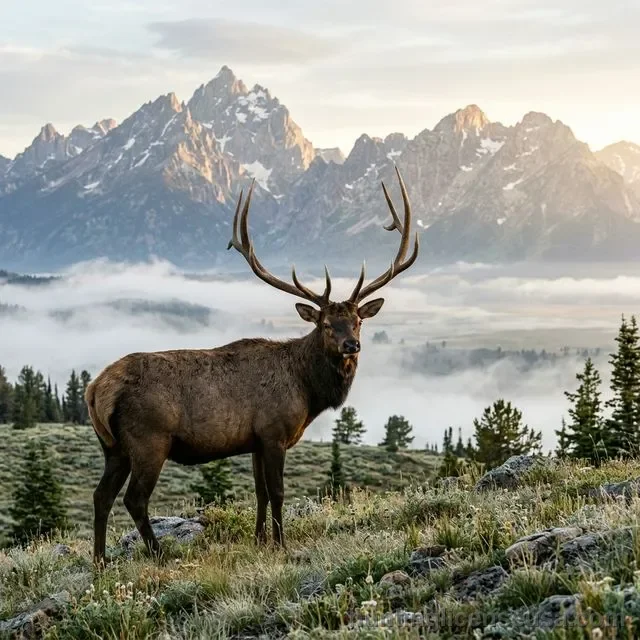
The two main point systems used in hunting draws are fundamentally different in how they reward waiting:
Preference Points (Colorado, Wyoming, Arizona) — A queue-style system in which higher-point applicants usually have priority, but the exact mechanics depend on state, species, hunt code, quota split, and residency. If last year's cutoff was 4 and you have 5 points, you may be in a strong position, but it is not a universal promise because quotas and applicant behavior can change. This system rewards patience but creates a "point creep" problem where the number of points needed increases each year. Colorado elk units can require 15–20+ preference points for some premium bull tags.
Bonus Points — A weighted lottery used by several Western states. Each point gives you a better chance, but not a guarantee. Someone with fewer points can still draw ahead of a higher-point applicant depending on the state's formula.
Squared Bonus Points (Nevada) — Nevada uses a uniquely powerful variation. Your accumulated bonus points are squared, then one chance is added for the current year. For example, 5 bonus points = (5 × 5) + 1 = 26 chances in the draw, versus just 6 chances under a standard bonus system. This makes Nevada's system exponentially reward patience. Important: if you fail to apply for two consecutive years, you lose all accumulated bonus points for that species.
Hybrid Systems — Some states use a mix. Wyoming allocates 75% of tags to the preference point pool and 25% to a random draw, giving everyone a chance while still rewarding loyalty. Montana uses preference points for moose, sheep, and goat, but bonus points (squared) for deer and elk.
No Points (Iowa, Kansas) — Some states run a pure random draw with no point system. Every applicant has equal odds regardless of how many times they've applied. Iowa's non-resident deer draw is a notable example.
Application Timelines by State (2026)
Missing an application deadline can mean waiting another year, but by May 2026 the better question is often whether the primary draw is closed, whether a secondary or leftover path exists, and what the next state-specific window is.
Colorado — Big game primary draw applications ran March 1 – April 7, 2026. For current planning, watch result dates, secondary draw details, leftover lists, returned licenses, and the unit list for any remaining OTC rifle opportunity.
Montana — Non-resident big game combination applications closed April 1, 2026. Hunters should still verify Deer B, Elk B, antelope, and leftover or alternate-list timing because those paths can sit outside the main combination-license deadline.
Wyoming — Non-resident elk applications closed in February 2026, while deer and several resident windows extend later in the year. Wyoming also requires special attention to full-price application costs, modification deadlines, and wilderness-area outfitter rules for non-residents.
Nevada — Main big game applications run in spring and Nevada uses a squared bonus point system. To keep building points, verify the license purchase and point rules before choosing an application option.
Oregon — Controlled hunt applications typically run through late spring for fall hunts, with results in early summer. Check the current Oregon controlled-hunt deadline before relying on any prior-year date.
Idaho — Fall 2026 controlled hunt applications for deer, elk, pronghorn, swan, fall black bear, and fall turkey run May 1 – June 5, 2026. Idaho does not work like a traditional preference-point state, so read the current hunt booklet and draw rules before choosing hunt numbers.
Strategies to Maximize Your Draw Odds
While luck plays a role, strategic planning can significantly improve your chances:
1. Buy points while you wait. If you know you want to hunt a specific unit eventually, start buying preference/bonus points now — even if you don't plan to apply for a few years. Colorado charges $40/species and Montana charges $50 for non-resident deer and $100 for elk point-only purchases. Think of it as a long-term investment.
2. Target "point creep" sweet spots. Some units require many points, but adjacent or similar-quality units may require far fewer. Use draw odds data (available on goHUNT, Toprut, or each state's website) to find units where your point level gives you good odds.
3. Apply as a group (carefully). Some states allow group applications where everyone draws or no one does. This works if everyone has similar point levels. If one person has significantly fewer points, they drag the group down. In Nevada, party member bonus points are averaged and rounded, then squared.
4. Consider leftover tags. After the main draw, leftover tags can be gold mines. Colorado, Montana, and Wyoming all offer substantial leftover opportunities. Set calendar reminders for leftover sales dates and be ready to buy immediately — popular units sell out in hours.
5. Apply for multiple states. Diversify your applications across several states to increase your overall chances of drawing something each year. The cost of applications adds up ($5–$150 each), so budget accordingly.
6. Don't ignore doe/cow tags. Antlerless tags (cow elk, doe deer) often have much better draw odds and provide excellent hunting and meat. Many experienced hunters apply for trophy bull/buck tags with their points while also applying for antlerless tags as a backup.
7. Watch for point expiration rules. Nevada's bonus points expire if you skip two consecutive years. Montana's preference points for moose/sheep/goat have specific maintenance requirements. Keep a calendar of which states require annual point purchases to prevent losing years of investment.
Non-Resident Draw Challenges
Non-residents face additional hurdles in most draw systems. States typically allocate 10–20% of tags to non-residents, with the remainder going to residents. This means significantly lower draw odds for out-of-state hunters.
Montana made this gap wider for 2026–2027 by reducing non-resident general deer combination licenses by approximately 2,500 tags, citing overcrowding on public lands and mule deer population concerns. Non-resident elk combo licenses cost $1,112, deer combo $760, and the big game (deer + elk) combo is $1,312 — plus a $50 base hunting license and $10 conservation license purchased separately.
Some states have outfitter sponsorship requirements for non-residents in certain areas. Wyoming requires non-residents to hunt with a licensed outfitter in designated wilderness areas. This adds $3,000–$7,000 or more to the total hunt cost.
Despite these challenges, the Western draw system offers access to world-class big game hunting that simply doesn't exist elsewhere. A Colorado bull elk tag, a Montana mule deer hunt, or a once-in-a-lifetime Wyoming bighorn sheep tag are worth the wait for many hunters.
Eastern State Draw Systems: Deer, Turkey, and Bear
Draw systems aren't exclusive to the West. Many Eastern and Midwestern states use lottery draws for specific species or zones:
Kentucky elk — Kentucky has the largest elk herd east of the Mississippi (approximately 15,000 animals in 16 eastern counties). Non-resident elk tags are available by draw through the KDFWR lottery. Resident elk tags are also draw-only. The application window is typically in spring. Non-resident elk permits cost $1,050–$1,500 depending on the method. See Kentucky hunting license costs.
Pennsylvania bear — Pennsylvania operates a bear license lottery system in certain Wildlife Management Units (WMUs) where tags are limited. General statewide bear licenses are available over the counter for an additional fee, but special seasons require lottery applications. See Pennsylvania hunting license costs.
Michigan deer — Michigan uses a Restricted Access License (RAL) system where certain state game areas issue a limited number of licenses per hunting block to manage crowding. Applications are typically submitted in July–August with random selection. This system doesn't apply statewide but is used in high-demand public land units.
West Virginia black bear — West Virginia issues a limited number of archery bear licenses in specific districts (particularly in the eastern portion of the state). Applications are typically due in September for the fall season. See West Virginia hunting license costs.
Non-resident whitetail draws — Iowa's non-resident deer tags are available by lottery, which often draws several times more applicants than available tags. Iowa does not use preference points — it's a pure random draw. Applications typically open in late July with results in late August. Wisconsin's Earn-A-Buck program (which required harvesting does before bucks in certain CWD zones) was discontinued, but antlerless permit availability in specific zones remains draw-based.
Species That Commonly Require Draws
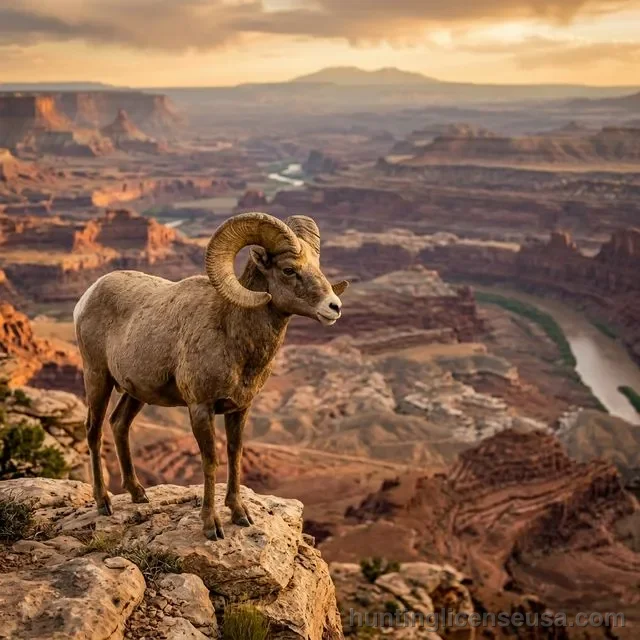
Elk — Draw required in most Western states for specific units. Colorado, Montana, Wyoming, Arizona, New Mexico, Oregon, and Washington all have significant draw components. See our elk hunting license guide for cross-state cost comparison.
Moose — Usually a limited-entry draw or tightly allocated permit path in the states that offer moose hunting. Tags are extremely limited — some states issue fewer than 100 per year — and point systems can take many years in states like Montana and Wyoming. See our moose hunting license guide.
Bighorn Sheep — Once-in-a-lifetime tag in most states. Draw odds can be worse than 1 in 1,000. Montana, Wyoming, Colorado, Idaho, Oregon, and Nevada all offer bighorn draws. Nevada restitution for an illegally taken bighorn ram can exceed $30,000.
Mountain Goat — Similar to bighorn sheep: extremely limited and commonly handled through limited-entry or once-in-a-lifetime style draw rules. Washington, Montana, Colorado, and Idaho offer mountain goat draws.
Antelope (Pronghorn) — Draw required in many Western states and units. Wyoming, Montana, Colorado, and Arizona all have antelope draws, though many Wyoming units are OTC for residents.
Bear — Draw required in some states (Michigan, West Virginia, parts of Pennsylvania). Other states offer OTC bear tags. See our bear hunting license guide.
Frequently Asked Questions
What is a preference point in hunting?
A preference point is earned each year you apply for or purchase a point for a hunting draw and are unsuccessful. Points accumulate over years. In preference-point systems, applicants with the most points are drawn first, creating a queue-like system. Bonus-point systems work differently: points improve your odds but usually do not guarantee a tag. Each state uses its own formula, so check the current state rules before buying points.
How long does it take to draw an elk tag?
It depends heavily on state, unit, weapon type, residency, and whether you are chasing a premium bull tag or a lower-demand cow tag. Some premium units can take many years of points, while lower-demand units, cow tags, secondary draws, or leftover tags may be realistic much sooner. Non-residents should always compare draw odds with the current OTC or leftover list before assuming a state is impossible.
Can I buy preference points without applying for a tag?
Sometimes, but point-only rules vary by state. Some states let you buy a point without applying for the tag, while others require a qualifying license, application, species fee, or full draw workflow before a point can be earned. Colorado, Montana, Wyoming, Utah, California, Nevada, and Arizona each define point purchases differently, so price the full required path before assuming the point itself is the only cost.
What happens to unfilled draw tags?
Unfilled tags from the main draw become "leftover" tags, sold first-come, first-served. Colorado, Montana, and Wyoming all have significant leftover programs. Sales typically start in July or August. Popular units sell out quickly, but less-known units may have tags available for weeks.
Do I lose my preference points if I draw a tag?
Typically yes — when you successfully draw a tag, your accumulated preference/bonus points for that species reset to zero. This is why point management strategy matters: you want to use your points on the best possible unit, not "waste" them on a mediocre draw.
What are the best states for OTC elk tags?
For non-residents in 2026, the best OTC elk answer is more limited than it used to be. Colorado removed the broad non-resident OTC archery elk path, while any remaining OTC rifle options depend on the current season and unit list. Idaho non-resident general deer and elk access depends on advance tag processes rather than the old simple OTC purchase. Montana general elk access for non-residents is usually tied to combination-license applications. Start with the current state agency list, then build a backup around leftovers, returned tags, cow tags, or a different state.
How much does it cost to apply for hunting draws?
Application fees vary by state and species. Wyoming requires fronting the full license cost at application ($600–$1,300+ for NR elk/deer). Colorado charges a $40 application fee per species. Montana requires purchasing a base hunting license ($50 NR) and conservation license ($10) before applying. Budget several hundred dollars annually if applying across multiple Western states.
Sources
Listed sources support the official examples, planning framework, and agency links highlighted in this guide. They do not verify every state rule, fee, season date, private-land exception, application deadline, or late emergency update without checking the current agency page.