
So You Want to Start Hunting
More people are taking up hunting than at any time in the past decade. Whether you're drawn to hunting for the organic, free-range meat, the outdoor experience, wildlife conservation, or the self-reliance aspect, this guide will walk you through everything you need to know to go from "interested" to "first hunt."
The process can seem overwhelming — licenses, tags, hunter education, gear, finding land, understanding regulations. But broken down into steps, it's straightforward. Most new hunters go from zero to their first hunt in 4–8 weeks.
This guide is designed for adult-onset hunters — people who didn't grow up in a hunting family. No assumptions about what you already know. Let's start from the beginning.
Step 1: Choose What to Hunt First
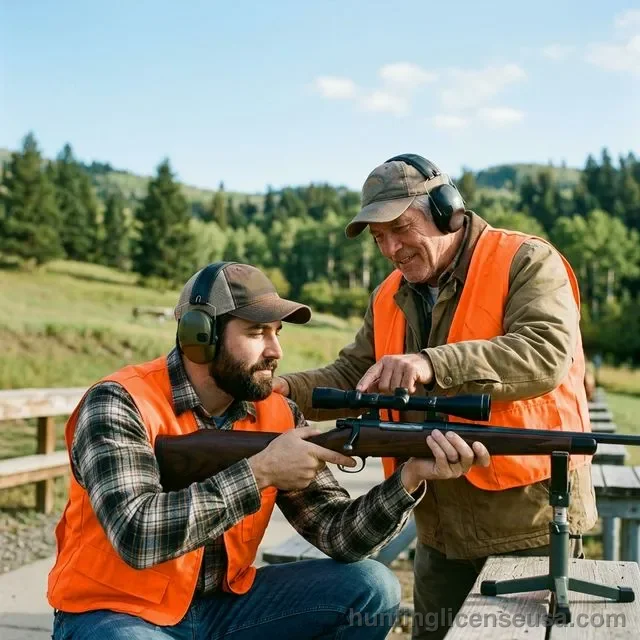
Your first hunt should be simple, affordable, and have a reasonable chance of success. Here's what we recommend for beginners:
Best first game: Whitetail Deer (firearm season) — Available in all 50 states. Abundant populations (estimated 30+ million nationwide). General firearm seasons offer the highest success rates (often 30–50% harvest rates depending on state). Provides 40–70 pounds of excellent table fare per animal. Licenses are affordable ($10–$50 for residents). Season lengths are generous (2–6 weeks in most states).
Good alternative: Turkey (spring season) — Active hunting with calling makes it exciting and engaging for new hunters. Shotgun-only simplifies gear needs. Spring seasons have fewer conflicts with other fall activities. Success rates are moderate (15–25%). Requires learning basic turkey calling, but even beginner calls can work.
Easiest start: Squirrel or rabbit — No tags required in most states (just a base hunting license). Season is long — typically September through February. Teaches woods skills, shot placement, and game processing on a smaller, less intimidating scale. Low pressure, forgiving mistakes. Excellent table fare that's often overlooked. Dove can also be a lower-cost entry point when the dove hunting license requirements are limited to the base license, HIP, and a simple state permit.
Not recommended for first hunt: Elk (requires extensive fitness, Western travel, and often a draw tag), waterfowl (needs specialized decoys, calls, waders, and ideally a trained retriever), or upland birds like pheasant and quail (requires wing-shooting skills that take practice to develop).
Step 2: Complete Hunter Education
Almost every state requires first-time hunters to complete a hunter education course before purchasing a license. The good news: the online portion is free in most states (some charge $10–$30 for a study-at-your-own-pace option).
The course covers firearms safety, wildlife identification, hunting ethics, regulations, and survival skills. Plan for 6–10 hours of online coursework. Most states also require an in-person field day (4–6 hours) where you demonstrate safe firearms handling and pass a written exam.
Some states allow a one-year deferral or apprentice license, letting you hunt with an experienced mentor before completing the course. Currently, over 38 states offer some form of apprentice/mentor program. This is an excellent option if hunting season is approaching and you want to try it before committing to the full course.
For complete details on course options, costs, and state-by-state requirements, see our Hunter Education Course Guide.
Step 3: Get Your Hunting License
Once you have your hunter education certificate, you can purchase your hunting license. The process is straightforward:
Buy online — Every state offers online license purchases through their wildlife agency website. You'll create an account, enter your hunter education certificate number, select your license type, and pay by credit card. Most licenses are available instantly as a digital document on your phone.
What to buy: For your first hunt, you need a base hunting license (typically $10–$50 for residents) and a species tag if required (e.g., a deer tag in most states). Some states bundle everything into one license; others require separate purchases. A Habitat Stamp or Conservation Certificate may also be required ($5–$15).
Season dates matter: Make sure you buy the correct season type — general firearm, archery, or muzzleloader. For your first deer hunt, choose general firearm season for the best success rates.
Use our Hunting License Cost Calculator to add up all the licenses, tags, and endorsements you'll need for your state. For a step-by-step walkthrough, see our How to Get a Hunting License guide.
Step 4: Get Essential Gear
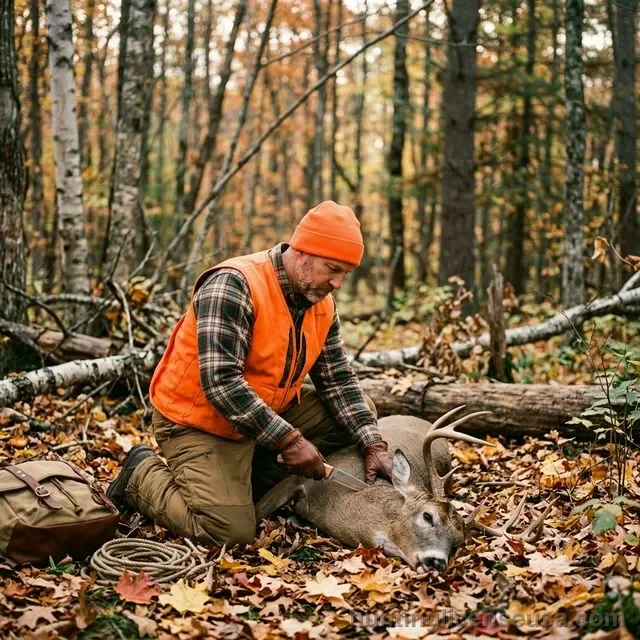
You don't need to spend thousands on gear for your first hunt. Here's a minimum gear list for a deer hunter:
Firearm: A bolt-action rifle in .308 Winchester or .30-06 Springfield is the most versatile first hunting rifle. Budget $400–$700 new, or find excellent used options for $250–$450 at pawn shops, gun shows, or online marketplaces. A 12-gauge shotgun with interchangeable chokes is the most versatile if you plan to hunt both deer (with slugs) and birds. Practice at a shooting range before hunting — you need to be consistently accurate at the distances you'll shoot (typically 50–150 yards for deer with a rifle).
Ammunition: Buy quality hunting ammunition (not target/plinking ammo) with appropriate bullet construction for your game. Expect $25–$50 for a box of 20. Practice with the same brand/weight you'll hunt with so you know exactly where your shots land.
Clothing: Dress in layers for the weather. Blaze orange/fluorescent orange is mandatory during firearm deer seasons in most states — typically 400+ square inches visible from all sides. A blaze orange vest and hat satisfy this in most states ($15–$30). Wear warm, waterproof boots that you've broken in before the hunt.
Other essentials: Knife (for field dressing — a $20 fixed-blade works fine), headlamp, water, snacks, first aid kit, license/tag (printed or on phone), compact binoculars ($50+), rope or drag sled, and a plan for getting the animal out of the field.
Budget-friendly tip: Borrow a rifle from a friend or family member for your first hunt. Many experienced hunters are happy to lend a firearm and mentor a new hunter. Total minimum cost: $350–$700 including a used rifle. Under $100 if you borrow the firearm.
Starter gear worth comparing before a first hunt
Keep the first purchase list boring and useful: safety, visibility, light, basic recovery gear, and optics before specialty upgrades.
Best for users who already know they need a license and are preparing for a first real hunt.
Browse the hunting gear category Blaze orange vest / hat
High-visibility outer layer for orange-required seasons and public-land safety rules.
Natural on beginner, deer, season, and state-compliance pages.
Tools for this stepHunting day pack
Carry layer, water, first aid, light, map, and basic field kit without overpacking.
Natural on public-land, beginner, and season-readiness pages.
Tools for this stepHeadlamp
Hands-free light for pre-dawn access, field dressing, and getting back to the vehicle.
Fits season planning, first-hunt, and field-prep content.
Tools for this stepLicense / tag wallet
Keeps licenses, tags, and emergency contact slips dry in the field.
Fits first-hunt, season-planning, and out-of-state trip prep.
Tools for this stepWeatherproof notebook
Useful for jotting down stand numbers, times, access notes, and unit reminders.
Natural on beginner and season-planning pages.
Tools for this stepField dressing knife
A basic fixed-blade or replaceable-blade knife for processing harvested game.
Best on deer, first-hunt, and harvest-prep pages.
Tools for this stepCompact first aid kit
Small trauma-aware kit for day hunts, range days, and remote access routes.
Relevant on safety, beginner, and season-readiness pages.
Tools for this stepCompact binoculars
Entry-level glass for scouting, identifying movement, and checking terrain.
Fits beginner, deer, public-land, and scouting content.
Tools for this stepCompact compass
Simple backup navigation for paper map use and low-service areas.
Strong on public-land and season-planning pages.
Tools for this stepHydration bladder
A simple way to carry water hands-free on longer public-land walks.
Fits public land, first-hunt, and season-readiness pages.
Tools for this stepWaterproof hunting boots
Broken-in boots matter more than extra gadgets on long sits, wet ground, and public access.
Fits first-hunt, public-land, and season pages.
Tools for this stepField seat cushion
Quiet comfort category for long ground sits, public-land edges, and beginner setups.
Natural on first-hunt, deer, and public-land pages.
Tools for this stepStep 5: Find a Place to Hunt
You have three main options for finding hunting land:
Public land — National Forests, BLM land, state Wildlife Management Areas, and Walk-In Access properties are all open to public hunting, usually at no cost beyond your license. Use an app like onX Maps ($30/year) to find public land boundaries near you. See our Best States for Public Land Hunting guide.
Private land with permission — Knock on doors and ask landowners. Many rural landowners are happy to grant permission, especially if you're polite, offer to share some of the processed meat, or help with property maintenance. A face-to-face conversation works much better than a phone call or letter. Bring your hunter education card to show you're safety-certified. Read our hunting on private land rules.
Leased or guided hunts — For your first experience, a guided hunt ($200–$500 for a day) removes much of the complexity. A guide provides the land, knowledge of animal patterns, and help with field dressing. State wildlife agencies, local gun clubs, and conservation organizations (NWTF, RMEF, Pheasants Forever) often offer free or low-cost beginner/mentored hunt events — check your state agency website for "Learn to Hunt" programs.
Step 6: Scout Before You Hunt
Don't show up on opening morning without having visited your hunting spot first. Pre-season scouting dramatically increases your success rate:
Visit 2–4 weeks before the season. Walk the property or public land area. Look for game trails, tracks, rubs (scrapes on trees from antlers), droppings, feeding areas (acorns, crop fields), and bedding areas (thick brush on slopes).
Set up a trail camera if you have access (and it's legal in your state — some states ban trail cameras during certain seasons). Even a $40 trail camera can tell you what animals are in the area and when they're moving. Place cameras on well-used trails near food sources.
Identify your stand/blind location. For deer hunting, set up downwind of trails and food sources. Morning hunts work best near bedding areas; evening hunts work best near food sources. Plan entry/exit routes that don't spook animals — approach from downwind.
Check accessibility. Can you get your vehicle close enough to haul an animal? A 150-lb deer is extremely difficult to drag more than a few hundred yards. Practice the hike to your hunting spot in the dark so you're not stumbling on opening morning.
Step 7: Your First Hunt Day
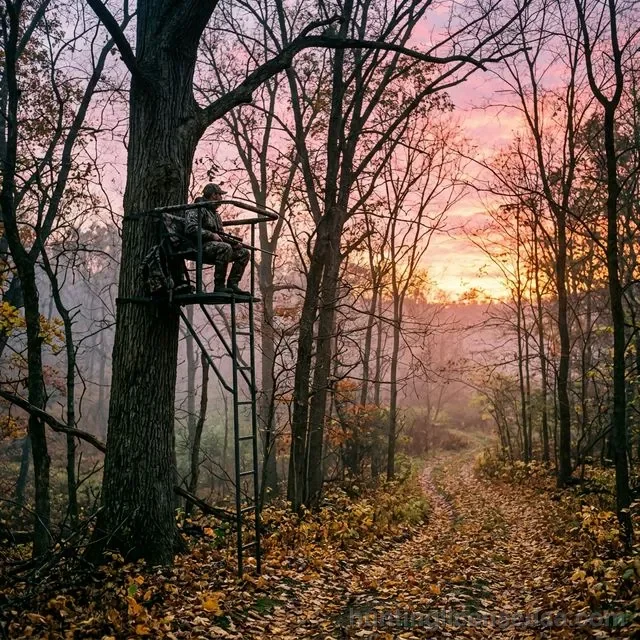
The day has arrived. Here's how to make it count:
Arrive early. Be in your stand or blind at least 30 minutes before legal shooting light (which varies by state — typically 30 minutes before sunrise). For morning hunts, that means getting up at 4–5 AM. Use a headlamp with a red filter on the walk in, then turn it off well before shooting light.
Be quiet and patient. Most beginner mistakes involve too much movement and noise. Once you're in position, sit still. Hunting is 90% waiting. Bring a book or just enjoy the sunrise. Resist the urge to check your phone — the glow and movement can spook game.
Know your shooting lanes. Before an animal appears, identify clear shooting lanes and range markers (a tree at 100 yards, a rock at 75 yards). Never take a shot you're not confident in — an ethical, clean kill is non-negotiable. Aim for the heart/lung area (behind the front shoulder, about one-third up from the belly line).
After the shot: Mark the time and location. Wait at least 30 minutes before tracking a deer (longer if you suspect a gut shot — wait 4+ hours). Blood trailing takes patience. If you lose the trail, mark the last blood spot and search in expanding circles. If you can't find the animal after a thorough search, contact your state's game warden for guidance — most states require you to make a reasonable effort to recover wounded game.
Field dressing: Watch tutorial videos on field dressing your game species before your hunt (YouTube channels like MeatEater and The Hunting Public have excellent step-by-step guides). The basic process takes 15–20 minutes once you've done it a few times. Many hunting mentors are willing to walk you through your first field dressing.
Finding a Hunting Mentor
The single best thing you can do as a new hunter is find an experienced mentor. A mentor shares knowledge that takes years to learn on your own — and makes the first experience far more enjoyable and safe.
Where to find mentors: National Wild Turkey Federation (NWTF), Rocky Mountain Elk Foundation (RMEF), and Pheasants Forever all have local chapters that welcome new hunters and often organize mentored hunts. Your state wildlife agency likely runs "Learn to Hunt" or "Becoming an Outdoors Woman (BOW)" programs pairing beginners with experienced hunters.
Online communities: Reddit's r/Hunting and r/HuntingMentors are active communities where experienced hunters offer to take newcomers. MeatEater's "First Hunt" program, the Hunting Public YouTube channel, and Wired To Hunt provide excellent educational content for beginners. Podcast: "Meateater," "Wired To Hunt," and "The Rich Outdoors" are top picks for new hunters.
Don't be embarrassed to ask. The hunting community overwhelmingly welcomes newcomers. More new hunters means more funding for wildlife conservation through Pittman-Robertson excise taxes on firearms and ammunition, and more political support for hunting rights and public land access.
What to Do with Your Harvest
Congratulations on your first harvest! Now what?
Professional processing: Most local butchers and meat processors will process wild game for $75–$200 per deer, depending on your location and the cuts you want. This is the easiest option for your first animal. Ask hunting friends or your local sporting goods store for processor recommendations.
DIY processing: If you want to process the animal yourself, you'll need a sharp knife set, clean workspace, cooler with ice, and 3–4 hours of time. YouTube channels like MeatEater, The Bearded Butchers, and Scott Rea Project have excellent tutorials. Start simple — steaks, roasts, and ground meat.
Cooling the meat: Get the animal field dressed and cooled as quickly as possible. If temperatures are above 45°F, you need to get the carcass to a cooler or processor within a few hours to prevent spoilage. In colder weather, you can hang the animal in a garage or shed for aging.
Venison yield: A typical whitetail deer yields 40–70 pounds of boneless meat depending on the animal's size and your butchering efficiency. That's roughly $400–$700 worth of organic, free-range, hormone-free protein at grocery store prices.
Frequently Asked Questions
How much does it cost to start hunting?
Minimum startup costs: Hunter education (free–$30 in most states), hunting license + deer tag ($20–$75 for residents), a used rifle ($250–$450), ammunition ($30–$50), and basic clothing/gear ($50–$150 including blaze orange). Total: roughly $350–$750 to get started. You can reduce this under $100 by borrowing a firearm from an experienced hunter.
Am I too old to start hunting?
Absolutely not. Many hunters start in their 30s, 40s, and beyond. Adult-onset hunters are the fastest-growing segment of new hunters. The key is starting with appropriate game (deer or turkey over elk) and finding a mentor. Most states offer adult hunter education courses designed specifically for beginners.
Do I need to own land to hunt?
No. Public land (National Forests, BLM, WMAs) is open to all hunters with valid licenses. Many states also have Walk-In Access programs on private land. Additionally, simply asking rural landowners for permission often works — many appreciate having responsible hunters manage deer populations on their property.
What is the best first hunting rifle?
A bolt-action rifle in .308 Winchester or .30-06 Springfield is the most versatile first hunting rifle. Both cartridges are effective on deer, elk, and black bear at typical hunting distances (50–250 yards). Popular budget-friendly options include the Ruger American, Mossberg Patriot, and Savage Axis II. If you want one gun for deer and birds, a 12-gauge pump shotgun (Mossberg 500 or Remington 870) offers maximum versatility.
How do I learn to process my own game?
Start by using a professional processor ($75–$200 per deer) for your first animal to see the cuts and quality outcome. Then try DIY on subsequent harvests — MeatEater, The Bearded Butchers, and Scott Rea Project all have excellent step-by-step YouTube tutorials. All you need is a sharp knife set, clean surface, cooler with ice, and patience.
Is hunting safe?
Hunting is statistically very safe. Fewer than 1,000 firearm-related hunting incidents occur annually across 15+ million U.S. hunters, with fewer than 100 fatalities per year. Fatal hunting accidents have declined steadily since hunter education became mandatory. Always follow the four basic safety rules: treat every firearm as loaded, never point at anything you don't intend to shoot, be sure of your target and what's beyond it, and keep your finger off the trigger until ready to fire.
Can I hunt if I'm a vegetarian or have never handled a firearm?
Yes on both counts. Many new hunters come from non-hunting backgrounds. Hunter education teaches firearm safety from scratch, and range time with a mentor builds confidence quickly. If you're vegetarian but interested in hunting for conservation or self-reliance reasons, many hunters donate their harvest to programs like Hunters for the Hungry that provide venison to food banks.
Sources
Listed sources support the official examples, planning framework, and agency links highlighted in this guide. They do not verify every state rule, fee, season date, private-land exception, application deadline, or late emergency update without checking the current agency page.