
Hunting License Benefits for Veterans and Military
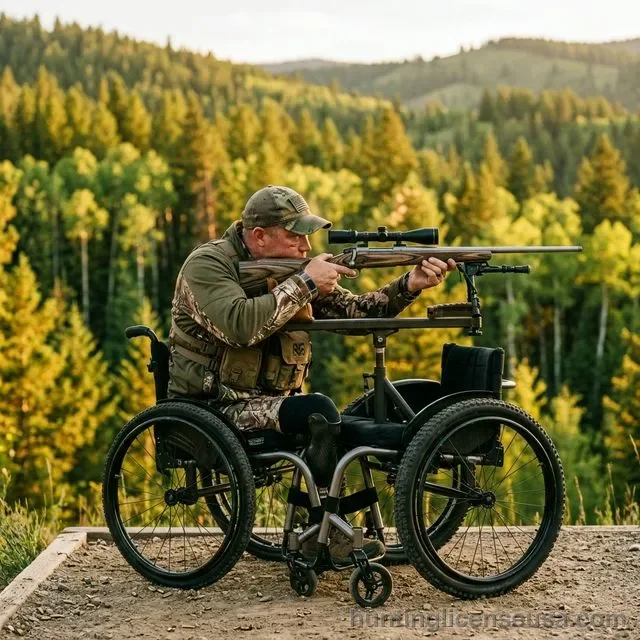
Nearly every U.S. state offers some form of hunting license benefit for veterans, disabled veterans, and active duty military personnel. These range from completely free lifetime licenses to modest discounts on annual fees. The programs exist to honor military service and make outdoor recreation accessible to those who've served.
However, the benefits vary enormously from state to state. Texas offers a free Super Combo package (hunting + fishing + all endorsements) for disabled veterans with a 50% or higher VA rating — including non-residents. Meanwhile, some states offer only small percentage discounts or limit benefits strictly to residents. This guide covers every major state's veteran and military hunting license programs so you can find exactly what you're entitled to.
The three main categories of military hunting benefits are: disabled veteran programs (free or discounted licenses based on VA disability rating), active duty stationed military (resident license rates regardless of home state), and general veteran discounts (reduced fees for all honorably discharged veterans).
States with Free Licenses for Disabled Veterans
Several states provide completely free hunting licenses for disabled veterans who meet specific VA disability rating thresholds. Here are the standout programs to verify against current agency eligibility rules before applying:
Texas — Free Disabled Veteran Super Combo Package for veterans with a 50% or higher service-connected disability or loss of use of a foot or leg. This package includes hunting license, fishing license, and all endorsements (archery, migratory bird, upland game, freshwater/saltwater stamps). Applies to both residents and non-residents. Must show official VA documentation (issued within the last 12 months) or a Texas Driver's License with "Disabled Veteran" designation. Must apply in person at a licensed retailer.
Florida — Free Persons with Disabilities Resident Hunting/Fishing License for Florida residents with a 100% permanent and total service-connected disability from the VA. Covers hunting, saltwater fishing, freshwater fishing, and associated permits. Important: This benefit is for Florida residents only — non-resident disabled veterans do not qualify for free or discounted licenses and must purchase standard non-resident licenses.
Illinois — Free hunting and fishing licenses (including Habitat Stamp) for veterans with a 10% or greater service-connected disability. One of the lowest disability thresholds in the country for free license eligibility. Applies to both resident and non-resident disabled veterans. Requires DD-214 and Disability Affidavit from the Illinois Department of Veterans' Affairs (IDVA). The license is permanent and does not require annual renewal for those with permanent qualifying disabilities.
New Jersey — Free hunting and fishing licenses, permits, and stamps for honorably discharged resident veterans with any degree of service-connected disability as determined by the VA. This includes unlimited antlerless deer permits, free antlered deer permits, two free spring turkey permits, and free bear permits. Initial certification must be done via mail to NJ Fish and Wildlife (not available online or at license agents), but once certified, future licenses can be obtained online or at license agents.
Oregon — Free combination license (hunting + fishing + shellfish + Columbia River Basin Endorsement) for resident disabled veterans with a 25% or higher disability rating. As of 2026, also includes the Ocean Endorsement. Eligible veterans also receive a discounted elk tag. First-time applicants must submit a letter from the VA showing disability rating. Renewal can be done online.
Michigan — Free hunting and fishing licenses for resident veterans with 100% service-connected disability or those individually unemployable due to service-connected conditions.
Pennsylvania — Reduced hunting license ($2.97) for resident veterans with 60% or higher service-connected disability incurred during a war or armed conflict. Note: the disability must be specifically war-related — general service-connected disabilities that did not occur during wartime may not qualify under current law. Proposed legislation (Senate Bill 1020) could expand eligibility to non-combat disabilities. Active duty military stationed in PA pay just $2.97 for a resident hunting license.
Tennessee — Permanent sport combination hunting and fishing license for just $10 (one-time fee) for resident veterans with a 100% total and permanent disability rating, or 30% or more disability from wartime service.
Active Duty Military: Resident License Rates
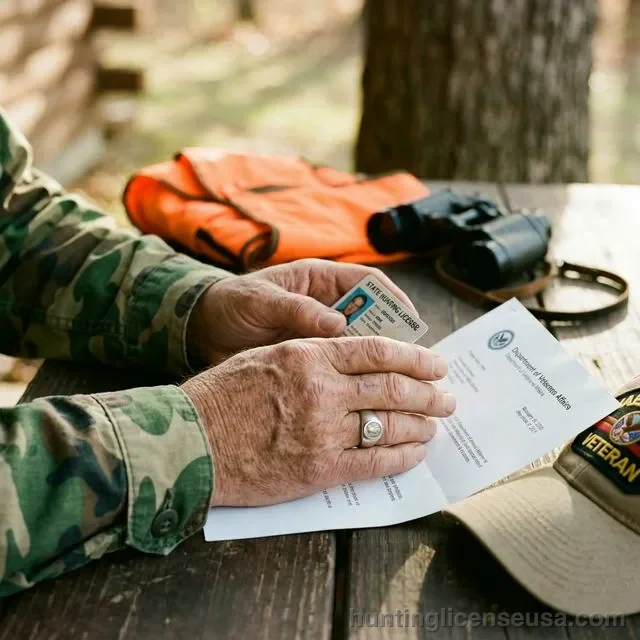
If you're active duty military stationed away from your home state, you almost certainly qualify for resident hunting license rates in the state where you're stationed. This can save hundreds of dollars, especially in Western states where non-resident licenses cost $500–$1,300+.
The typical policy: active duty military personnel permanently stationed in a state can purchase hunting licenses at resident rates, regardless of their legal state of residence. Most states require your military ID (CAC card) and orders showing your duty station.
Key examples: California — active duty stationed in CA pay resident rates ($55.42 vs. $180.60 for annual hunting). Georgia — full-time active duty stationed in GA, plus dependents, qualify for resident licenses. Alabama — military stationed for 30+ days qualify for resident rates. Louisiana — resident rates for active duty and dependents stationed in state.
Many states also allow military members to maintain resident status in their home state even while stationed elsewhere. For example, Washington and Wisconsin allow their residents serving on active duty out of state to still buy licenses at resident rates.
Some states go further: Alabama exempts resident military on leave from needing a hunting license entirely (though species permits may still apply). Wisconsin offers free small game and fishing licenses to active service members.
Hunter Education Exemptions for Military
Many states exempt active duty military and veterans from hunter education requirements, recognizing that military firearms training meets or exceeds hunter safety standards.
States with military hunter education exemptions include Michigan, Montana, Pennsylvania, Colorado, Georgia, and many others. The exemption typically applies to active duty, reserves, and National Guard members, and sometimes extends to honorably discharged veterans.
However, not all states honor this exemption. Missouri, for example, still requires hunter education for those born after January 1, 1967, regardless of military service. New Jersey requires hunter education (including live fire) even for disabled veterans obtaining their first firearm hunting license. Always check your state's specific policy before assuming your military service qualifies.
If your state does require hunter education, the course is available free online in most states and takes 6–10 hours to complete. See our hunter education course guide for details.
Required Documentation
To claim veteran or military hunting license benefits, you'll typically need one or more of the following documents:
For disabled veteran benefits: VA disability rating letter (also called a "benefits summary letter" from VA.gov), showing your percentage of service-connected disability. Some states (like Texas) require this to be issued within the past 12 months. Your DD-214 (Certificate of Release or Discharge from Active Duty) showing honorable discharge status. Some states also accept a state-issued driver's license with "Disabled Veteran" designation.
For active duty military rates: Current military ID (CAC card) and orders or Leave and Earnings Statement (LES) showing your duty station in that state. Some states accept a letter from your commanding officer.
For general veteran discounts: DD-214 showing honorable or general discharge. Some states also accept a Veterans Affairs ID card or a state-issued veteran designation on your driver's license.
If you've lost your DD-214, you can request a replacement from the National Personnel Records Center (NPRC) by submitting SF-180 online at eVetRecs. Processing typically takes 10–30 days.
How to Apply for Veteran Hunting License Benefits
The application process varies by state, but follows a general pattern:
Step 1: Gather your documentation — VA disability letter, DD-214, and state ID or driver's license. Make sure your VA letter is current (some states require it to be issued within the last 12 months).
Step 2: Visit your state wildlife agency website or an in-person license vendor. Some states handle veteran licenses only at the main agency office or regional offices (not at Walmart or sporting goods stores), so check first. For example, Texas requires in-person application at a licensed retailer, while New Jersey requires initial certification via mail.
Step 3: Present your documentation and request the veteran/military license type. Online purchase may be available after initial certification — look for "disabled veteran" or "military" options in the license type dropdown.
Step 4: Some states issue a one-time certification (like New Jersey) that stays on file permanently, while others require you to present documentation annually (like Texas). Know your state's renewal process.
For a quick lookup of your state's wildlife agency and online license portal, visit your state's hunting license page — each page includes direct links to the official purchase portal.
Federal Duck Stamp and Military
Even with a free or discounted state hunting license, waterfowl hunters age 16 and older must purchase a Federal Migratory Bird Hunting and Conservation Stamp (commonly called the Federal Duck Stamp) for $25. This is a federal requirement administered by the U.S. Fish and Wildlife Service, and no state veteran exemption overrides it. For dove trips, use the dove hunting license requirements to separate HIP and state migratory-bird rules from waterfowl-only stamp requirements.
The Federal Duck Stamp is valid from July 1 through June 30 of the following year. Purchase it online at the USPS website, at post offices, or through most state license vendors. The stamp funds the National Wildlife Refuge System — over 98% of the stamp's revenue goes directly to wetland habitat conservation.
Note: The Federal Duck Stamp is not included in Texas's free Super Combo package. Veterans who plan to hunt waterfowl must purchase it separately regardless of their disability status.
Veteran Hunting Organizations and Programs
Beyond license discounts, several organizations provide hunting opportunities specifically for veterans:
Wounded Warrior Project (WWP) — Offers organized hunts and outdoor recreation events for post-9/11 wounded veterans. Events include guided hunts, fishing trips, and outdoor skills training at no cost to participants.
Heroes Hunting (3Bravo) — Connects disabled veterans with donated hunting opportunities and licenses across multiple states. Maintains a database of state-by-state veteran hunting benefits.
HAVA (Honored American Veterans Afield) — Provides shooting sports and hunting experiences for disabled veterans, with events across the country at no cost, including adaptive equipment for wheelchair-bound hunters.
National Wild Turkey Federation (NWTF) — Operates the Hunting Heritage Super Fund and partners with veteran organizations to provide guided turkey hunts, mentorship programs, and gear for veteran hunters.
Many state wildlife agencies also partner with local veteran organizations to host special veteran-only hunting events, often on wildlife management areas with dedicated guides and accessible facilities. Florida, for example, issues special Military/Disabled Veteran Event License Exemption permits for organized rehabilitation events that exempt non-resident disabled veteran participants from license requirements for the event duration.
Frequently Asked Questions
Which states offer completely free hunting licenses for veterans?
Several states offer free hunting licenses for disabled veterans, including Texas (50%+ disability — free Super Combo for both residents and non-residents), Florida (100% permanent disability — free for residents only), Illinois (10%+ disability — free for residents and non-residents), New Jersey (any disability — free for residents), Oregon (25%+ — free combo for residents), and Michigan (100% — free for residents). Eligibility is based on VA disability rating, and documentation requirements vary by state.
Can active duty military get resident hunting license rates in any state?
Most states allow active duty military stationed within their borders to purchase hunting licenses at resident rates, regardless of their home state. You'll typically need your military ID (CAC card) and duty station orders. Many states also let military members maintain resident rates in their home state while stationed elsewhere.
Do I still need a Federal Duck Stamp with a free veteran license?
Yes. The Federal Duck Stamp ($25) is a federal requirement for all waterfowl hunters age 16+, regardless of any state veteran exemptions. No state program can waive this federal requirement. It is not included in Texas's free Super Combo package. Purchase at post offices or online.
What documentation do I need for a veteran hunting license?
Most states require a VA disability rating letter (from VA.gov) showing your service-connected disability percentage, plus your DD-214 showing honorable discharge. Some states (like Texas) require the VA letter to be issued within the last 12 months. For active duty, you'll need your military ID (CAC) and orders showing your duty station. Some states accept a state driver's license with "Disabled Veteran" designation.
Do veteran hunting license benefits apply to non-residents?
Most veteran license benefits require state residency. However, there are notable exceptions: Texas offers a free Super Combo to disabled veterans (50%+ VA rating) regardless of residency, and Illinois extends free licenses to non-resident disabled veterans with 10%+ disability. Active duty military stationed in-state typically qualify for resident rates even as non-residents. Florida's free license is for residents only despite being a commonly cited exception.
Are military dependents eligible for hunting license discounts?
Some states extend resident license rates to dependents of active duty military stationed in-state (e.g., Georgia, Louisiana). However, disabled veteran license benefits typically do not extend to dependents. Check your specific state's policies.
Sources
Listed sources support the veteran and military discount examples highlighted on this page. They do not verify every state exemption, documentation rule, or renewal path without checking the current agency page.
- https://tpwd.texas.gov/regulations/outdoor-annual/licenses
- https://myfwc.com/license/recreational/do-i-need-a-license/
- https://www.nj.gov/dep/fgw/vetlicenses.htm
- https://myodfw.com/articles/licenses-and-tags-people-disabilities
- https://www.michigan.gov/dnr/buy-and-apply/hunting
- https://www.pgc.pa.gov/HuntTrap/LicensesandPermits
- https://dnr.illinois.gov/hunting/huntinglicenses.html
- https://www.tn.gov/twra/license-sales.html